Creatine in a Protein Shake Works - Not for the Reason You Think
No trial tested creatine mixed in a shake vs. taken separately. Post-exercise timing may offer a small edge, but the shake itself is just a convenience vehicle.
The popular belief is straightforward: mixing creatine into your protein shake creates a synergistic absorption effect, the protein "shuttles" creatine into muscle more efficiently, and the combination is greater than the sum of its parts. The reality from the trials is more interesting, and more honest. No randomized controlled trial in the literature reviewed here tested creatine mixed into a protein shake as a distinct intervention against the same compounds taken separately. What the evidence does show is that creatine monohydrate works at 3-5 g per day regardless of vehicle, that post-exercise timing may confer a small advantage over pre-exercise timing (lean tissue mass difference of approximately 2.5 kg over 32 weeks in older adults) [2], and that the protein side of the shake is itself overhyped in the trials reviewed here: adding whey did not improve recovery markers or muscle protein synthesis beyond placebo [5][6]. The shake is a convenience vehicle. It is not a delivery system with proven superiority over a glass of water.
What the science actually says
The question "can you mix creatine with whey protein" is everywhere online, yet the trial literature addresses it only obliquely. Here is what the studies actually tested.
Ribeiro et al. (2021) conducted a narrative review of creatine timing around exercise, published in Nutrients [1]. The authors examined studies comparing pre-exercise, during-exercise, and post-exercise creatine ingestion. Their conclusion: emerging evidence suggests greater benefits when creatine is consumed after exercise compared to pre-exercise, but methodological limitations currently preclude solid conclusions. They explicitly note that physiological and mechanistic data are lacking regarding claims that timing moderates gains in muscle creatine and exercise performance. This is a review, not an RCT, and the authors themselves flag the weakness of the underlying evidence. No study in this review tested creatine dissolved in a protein matrix versus water or carbohydrate.
Candow et al. (2015) is the most relevant trial for the timing question [2]. This was a double-blind, repeated-measures RCT in older adults aged 50-71 years (n = 39 total), randomized to three groups over 32 weeks of resistance training: creatine before exercise (CR-B, n = 15; 0.1 g/kg creatine immediately before training, placebo after), creatine after exercise (CR-A, n = 12; placebo before, creatine immediately after), or placebo both times (PLA, n = 12). The primary outcomes were lean tissue mass by DXA and 1-repetition maximum strength.
Results: CR-A produced greater improvements in lean tissue mass (Δ 3.0 ± 1.9 kg) compared with PLA (Δ 0.5 ± 2.1 kg; p < 0.025). For strength, creatine supplementation independent of timing increased muscle strength more than placebo. Leg press changes: CR-B Δ 36.6 ± 26.6 kg, CR-A Δ 40.8 ± 38.4 kg, PLA Δ 5.6 ± 35.1 kg. Chest press: CR-B Δ 15.2 ± 13.0 kg, CR-A Δ 15.7 ± 12.5 kg, PLA Δ 1.9 ± 14.7 kg (p < 0.025 for creatine vs. placebo). The post-exercise group showed a numerical advantage in lean mass over the pre-exercise group, but the trial was not powered to detect a timing difference per se. The creatine was taken with water, not mixed into protein.
Sims et al. (2023), the ISSN position stand on nutritional concerns of the female athlete, states that creatine supplementation of 3 to 5 g per day is recommended for mechanistic support regarding muscle protein kinetics, growth factors, satellite cells, myogenic transcription factors, glycogen and calcium regulation, oxidative stress, and inflammation [3]. For post-menopausal females, higher doses of 0.3 g/kg/day may support bone health, mental health, and skeletal muscle size and function. The position stand notes that both iron and creatine are highly efficacious for female athletes. No recommendation is made regarding mixing creatine with protein specifically.
Helms et al. (2014) reviewed evidence for natural bodybuilding contest preparation and concluded that creatine monohydrate, caffeine, and beta-alanine appear to have beneficial effects relevant to contest preparation [4]. The recommendation is for creatine monohydrate specifically, with no mention of co-ingestion with protein as a modifying factor.
Rogers et al. (2026) examined muscle recovery and integrated myofibrillar protein synthesis after damaging exercise, comparing recombinant bovine β-lactoglobulin, dairy-derived whey, and carbohydrate supplementation in 27 young healthy adults consuming about 0.9 g/kg/day of protein [5]. Integrated myofibrillar protein synthesis rose after the damaging exercise bout in all groups (P < 0.001), with no significant differences between supplementation groups, and recovery markers (maximum voluntary contraction, soreness, creatine kinase, lactate dehydrogenase) did not differ between groups either. The authors concluded that at habitual protein intakes, further whey supplementation had limited efficacy as a recovery tool [5]. No creatine arm: this trial matters here because it shows the protein side of the shake equation is itself weaker than the popular narrative assumes.
Saracino et al. (2020) compared pre-sleep whey versus plant-based protein consumption on muscle recovery following damaging morning exercise in 27 recreationally active middle-aged men [6]. There were no significant differences between groups for any outcome measure, and pre-sleep protein, regardless of source, did not aid recovery at 72 hours [6]. Again, no creatine was involved. The relevant signal is the direction: protein timing and source did not move recovery markers in this trial.
The pattern is clear: creatine has been studied extensively as a standalone intervention, protein has been studied extensively as a standalone intervention, but the specific act of dissolving creatine monohydrate into a protein shake has not been isolated as a variable in any of these trials.
How creatine timing may influence muscle loading
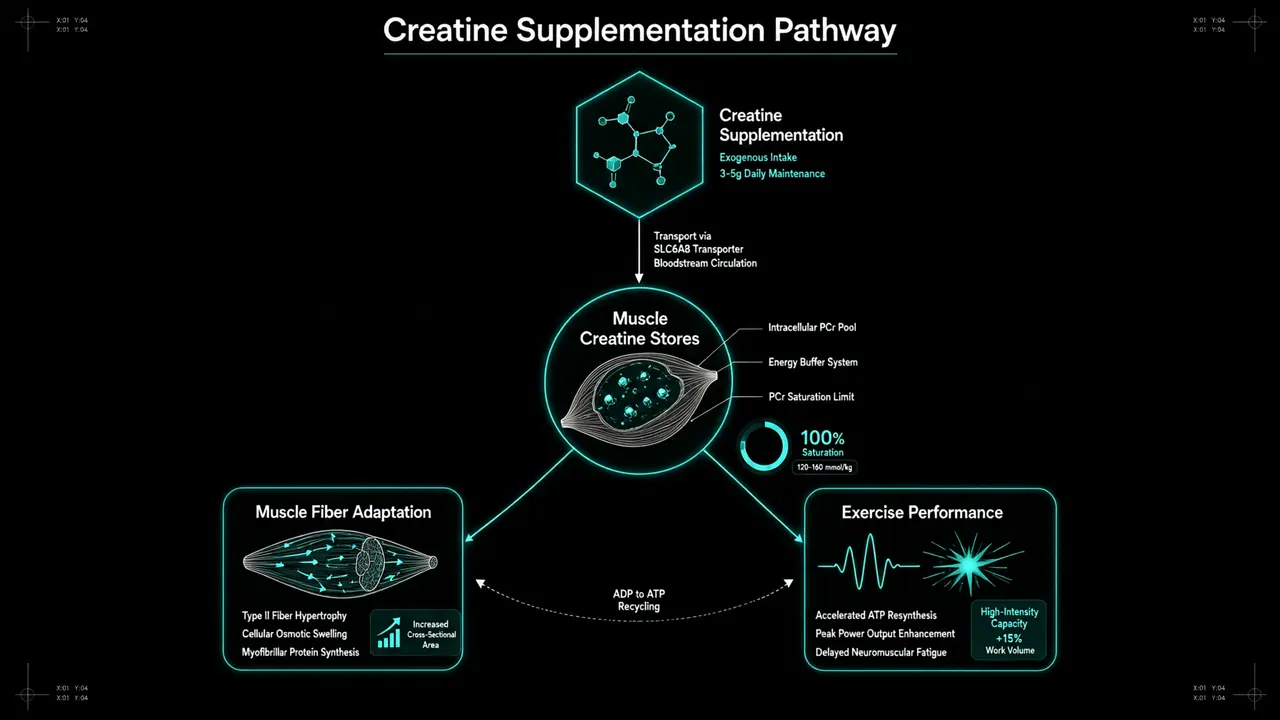
Creatine supplementation increases muscle creatine stores [1]. Several factors modify the intramuscular increase and subsequent performance benefits, including baseline muscle creatine content, type II muscle fibre content and size, habitual dietary intake of creatine, aging, and exercise itself [1]. The proposed mechanism for a post-exercise advantage involves increased blood flow to exercised muscle and upregulated creatine transporter activity following contraction, but Ribeiro et al. explicitly state that physiological and mechanistic data are lacking to confirm this [1].
Protein operates through a separate pathway: whey supplies essential amino acids, including leucine, that muscle uses for protein synthesis. The two recovery trials reviewed here temper the enthusiasm around that pathway: adding whey on top of habitual protein intake did not further enhance post-exercise myofibrillar protein synthesis or recovery markers compared with carbohydrate placebo [5][6]. These two pathways are not known to interact at the level of intestinal absorption or muscle uptake in any trial reviewed here. The theoretical "insulin spike from protein enhances creatine uptake" hypothesis has not been tested in a controlled comparison of creatine-in-shake versus creatine-alone.
Timing strategies compared
| Strategy | Evidence base | Key outcome | Limitation |
|---|---|---|---|
| Creatine post-exercise | Candow 2015 (CR-A arm, n = 12) [2] | Δ 3.0 ± 1.9 kg lean mass over 32 weeks vs. placebo Δ 0.5 ± 2.1 kg (p < 0.025) | Small sample; older adults only; not powered for timing comparison |
| Creatine pre-exercise | Candow 2015 (CR-B arm, n = 15) [2] | Strength gains similar to CR-A; lean mass not significantly different from CR-A | Same limitations |
| Creatine any time (3-5 g/day) | ISSN position stand [3] | Recommended dose for female athletes; mechanistic support for multiple pathways | Position statement, not a timing trial |
| Creatine mixed in protein shake | No direct trial identified in the studies reviewed here | N/A | The specific question remains untested |
The table makes the gap visible: the "creatine in protein shake" row has no trial data. What exists is extrapolation from timing studies and convenience logic.
Practical dosing
The studied dose across these trials is 0.1 g/kg per training day (Candow et al.) [2] or 3-5 g per day (ISSN position stand) [3]. For a 70 kg individual, 0.1 g/kg equals 7 g, which is above the 3-5 g general recommendation. The ISSN dose of 3-5 g/day is the more commonly cited range for ongoing maintenance.
Label literacy: Labels differ in whether they list creatine monohydrate weight or the free creatine equivalent. The trials reviewed here used creatine monohydrate [2][4], and the ISSN position stand recommends 3 to 5 g per day [3]. Standard guidance is to check what the label reports so you know how much creatine you are actually taking.
Duration expectations: The Candow trial ran 32 weeks before measuring outcomes [2]. Creatine saturation of muscle typically occurs over days to weeks of consistent dosing. A single shake on a single day will not produce measurable changes in muscle creatine content.
Tolerability: Creatine monohydrate is generally well tolerated at 3-5 g/day. Some individuals report mild gastrointestinal discomfort, particularly at higher single doses. Splitting the dose or taking it with food may reduce this. Standard guidance is that individuals with pre-existing kidney disease should consult a clinician before supplementing with creatine, as creatine metabolism involves renal clearance of creatinine.
Interaction considerations: If you are taking medications with narrow therapeutic windows or known nephrotoxic potential, standard guidance is to discuss creatine supplementation with a prescriber. The EverPrime interaction checker tracks 41 documented supplement-medication and supplement-supplement interactions and can flag relevant spacing or caution items for your specific stack.
For a broader overview of creatine forms, dosing, and evidence quality, see the creatine supplement guide.
What the evidence does NOT show
It does not show that creatine treats, cures, or prevents any disease. These are structure/function findings related to muscle creatine stores and exercise performance in healthy populations.
It does not show that mixing creatine into a protein shake enhances creatine absorption compared with taking creatine alone. The popular claim that protein "drives creatine into muscle" via an insulin-mediated mechanism is plausible in theory but untested in any controlled trial reviewed here. The evidence is generic to creatine supplementation, not form-specific to a shake vehicle.
It does not show that a "best protein powder with creatine" exists as a superior category. The trials used plain creatine monohydrate dissolved in water or taken as a powder alongside training. No head-to-head comparison of pre-mixed protein-creatine products versus separate ingestion was identified.
It does not show that timing is a major determinant of creatine efficacy. The Ribeiro review explicitly states that methodological limitations preclude solid conclusions about timing [1]. The Candow trial found creatine worked regardless of timing for strength, with a lean-mass advantage for post-exercise that may reflect chance given the small sample and lack of power for that comparison [2].
It does not show that you need both creatine and protein in the same shake to get benefits from either. These compounds operate through distinct mechanisms and have been studied independently. Co-ingestion is a convenience choice, not an evidence-based requirement.
Myth-check
Claim: "Protein enhances creatine absorption, so you should always mix them together."
Reality: No trial in the studies reviewed here tested this specific hypothesis. Creatine increases muscle creatine stores at 3-5 g/day regardless of co-ingested macronutrients [1][3]. The insulin-mediated uptake hypothesis is mechanistically plausible but remains unconfirmed in a controlled comparison. The practical implication: mix them if it helps you remember to take both. Do not mix them because you believe the combination is pharmacokinetically superior. That belief is not supported by the available trial data.
Claim: "You must take creatine immediately post-workout or you wasted your dose."
Reality: The Candow trial found that creatine increased strength regardless of whether it was taken before or after exercise [2]. The lean-mass difference favored post-exercise, but the trial was not designed or powered to establish timing as a causal factor. The Ribeiro review concurs: current consensus is lacking regarding the ideal ingestion time [1]. If you miss your post-workout window, take it later. Consistency over weeks matters more than minutes.
FAQ
Can I put creatine in my protein shake?
Yes. No trial in the literature reviewed here tested mixing creatine into a shake against taking it separately, and nothing in that literature suggests mixing degrades either compound [1]. The combination is a matter of convenience, not pharmacokinetic necessity.
Does mixing creatine with whey protein create a synergy?
No trial in the studies reviewed here tested a combined creatine-plus-whey intervention against separate ingestion. The timing literature suggests post-exercise ingestion may offer a small advantage regardless of vehicle [1][2]. The two compounds work through independent mechanisms.
How much creatine should I add to a shake?
The ISSN position stand recommends 3 to 5 g per day for general athletic use [3]. This is the same dose whether stirred into a shake, mixed with water, or taken as a standalone powder. For post-menopausal women, the position stand suggests higher doses of 0.3 g/kg/day may be appropriate [3].
Is creatine monohydrate in a protein shake different from other forms?
The trials reviewed here used creatine monohydrate exclusively [2][4]. No head-to-head comparison of creatine forms mixed into protein was identified. Creatine monohydrate remains the most studied and least expensive form.
Will I gain weight from adding creatine to my shake?
Creatine supplementation increases intramuscular water content, which can show up as a small scale increase in the first weeks. This is water within muscle cells, not fat gain. The Candow trial actually showed a decrease in fat mass across all groups over 32 weeks of resistance training [2]. If the scale moves up shortly after starting creatine, this is the expected osmotic effect, not a reason to stop.
Related reading
- Does creatine timing matter?
- Creatine and alcohol: what happens when they overlap
- EverPrime getting started guide
- Anxiety and stress-relief supplements
- Benfotiamine supplement guide
- Supplement science topic hub
- Myth-busting topic hub
References
-
Ribeiro F, Longobardi I, Perim P, Duarte B, Ferreira P, Gualano B, Roschel H, Saunders B (2021). Timing of Creatine Supplementation around Exercise: A Real Concern? Nutrients. https://pubmed.ncbi.nlm.nih.gov/34445003/ doi:10.3390/nu13082844
-
Candow DG, Vogt E, Johannsmeyer S, Forbes SC, Farthing JP (2015). Strategic creatine supplementation and resistance training in healthy older adults. Applied Physiology, Nutrition, and Metabolism. https://pubmed.ncbi.nlm.nih.gov/25993883/ doi:10.1139/apnm-2014-0498
-
Sims ST, Kerksick CM, Smith-Ryan AE, Janse de Jonge XAK, Hirsch KR, Arent SM, Hewlings SJ, Kleiner SM, Bustillo E, Tartar JL, Starratt VG, Kreider RB, Greenwalt C, Rentería LI, Ormsbee MJ, VanDusseldorp TA, Campbell BI, Kalman DS, Antonio J (2023). International society of sports nutrition position stand: nutritional concerns of the female athlete. Journal of the International Society of Sports Nutrition. https://pubmed.ncbi.nlm.nih.gov/37221858/ doi:10.1080/15502783.2023.2204066
-
Helms ER, Aragon AA, Fitschen PJ (2014). Evidence-based recommendations for natural bodybuilding contest preparation: nutrition and supplementation. Journal of the International Society of Sports Nutrition. https://pubmed.ncbi.nlm.nih.gov/24864135/ doi:10.1186/1550-2783-11-20
-
Rogers LM, Korzepa M, Belfield AE, Quinlan JI, Wallis GA, Breen L (2026). Muscle Recovery and Myofibrillar Protein Synthesis after Damaging Exercise with Recombinant Bovine β-Lactoglobulin, Dairy-Derived Whey or Carbohydrate Supplementation in Young Healthy Adults. The Journal of Nutrition. https://pubmed.ncbi.nlm.nih.gov/41500363/ doi:10.1016/j.tjnut.2025.101321
-
Saracino PG, Saylor HE, Hanna BR, Hickner RC, Kim JS, Ormsbee MJ (2020). Effects of Pre-Sleep Whey vs. Plant-Based Protein Consumption on Muscle Recovery Following Damaging Morning Exercise. Nutrients. https://pubmed.ncbi.nlm.nih.gov/32664290/ doi:10.3390/nu12072049
Disclaimer: The statements in this article have not been evaluated by the Food and Drug Administration. This content is for educational purposes only and is not intended to diagnose, treat, cure, or prevent any disease. It is not a substitute for professional medical advice. Consult a qualified healthcare provider before starting any supplement regimen, especially if you have pre-existing kidney conditions or take prescription medications.
Track your stack, not just your reps. The EverPrime interaction checker flags spacing issues and caution items across 41 documented supplement-medication interactions, so you know whether your creatine, protein, and everything else in your routine play well together.
Evidence Brief
Get supplement timing and safety notes as they ship.
Monthly evidence briefs. No hype, no disease claims, no influencer supplement stacks.