Benfotiamine Supplement: Trial Reality vs. Marketing Hype
The BOND trial found zero structural nerve changes from benfotiamine. We review the actual effect sizes, dosing, and honest mechanism of this B1 supplement.
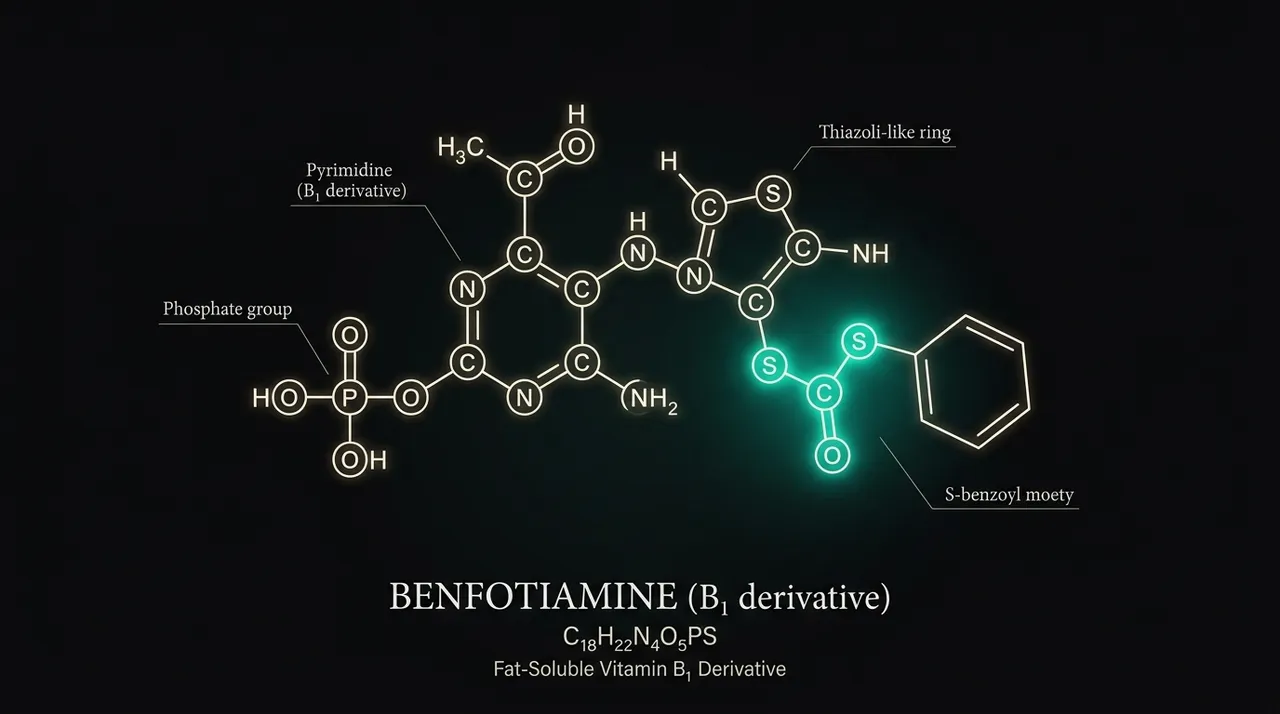
The popular belief surrounding any benfotiamine supplement is that this specialized fat-soluble B1 vitamin offers a near-universal metabolic shield. Influencers frequently list benfotiamine benefits ranging from nerve repair to cognitive enhancement, and curious buyers routinely search for the best benfotiamine supplement to address everything from blood sugar metabolism to hair loss. The reality from the trials is more interesting, and more honest. When researchers finally put this compound to the test in a rigorous, long-term clinical setting, the structural and functional outcomes were resoundingly null. The compound does exactly what it is supposed to do biochemically, but translating that into measurable anatomical or functional changes in humans has proven remarkably difficult. The most robust data we have shows a profound disconnect between biochemical markers and clinical effect sizes.
What the science actually says
The clinical evidence for benfotiamine is a masterclass in why short-term symptom changes must not be confused with long-term structural improvements. Evaluating the trials reveals a consistent pattern of biochemical engagement that fails to translate into objective tissue recovery.
The BOND study (Ziegler et al., 2026) is the most definitive trial we have. This was a 1:1 randomized, double-blind, placebo-controlled parallel-group phase II trial that compared a daily dose of benfotiamine 300 mg two times per day against a placebo over 12 months in participants with type 2 diabetes and mild-to-moderate symptomatic distal symmetrical polyneuropathy (DSPN) [2]. The primary endpoint was the change in corneal nerve fiber length assessed by corneal confocal microscopy. The result? The changes from baseline to 12 months in corneal nerve fiber length did not differ between the two groups.
The secondary endpoints in the BOND study were exhaustive, encompassing skin biopsy parameters, nerve conduction studies, quantitative sensory testing, cardiovascular autonomic function tests, and clinical scales. The corresponding changes in these secondary morphometric, functional, and clinical neuropathic outcomes, as well as quality of life, were also similar in the two groups [2]. The only metric that showed any movement was the Neuropathy Symptom Score, which tended to improve with a p-value of 0.098 versus placebo. Because this p-value exceeds the standard 0.05 threshold for statistical significance, it represents a non-significant trend. The lack of a reported effect size for this specific metric is a limitation of the abstract, and readers should be mildly disappointed that such a comprehensive test failed to yield a primary victory. Pharmacokinetically, the treatment successfully increased the concentrations of all six thiamine analytes studied (p ≤ 0.003 vs placebo) [2].
Contrast this massive, long-term investment with earlier, shorter pilot studies. The BEDIP study (Haupt et al., 2005) was a three-week randomized, placebo-controlled, double-blind pilot trial involving 40 inpatients with diabetic polyneuropathy [3]. The treatment arm received two 50 mg benfotiamine tablets four times daily (a total of 400 mg per day). After just three weeks, the researchers observed a statistically significant (p = 0.0287) improvement in the neuropathy score compared to placebo. The most pronounced effect was a decrease in pain (p = 0.0414).
However, the BEDIP study relied entirely on subjective symptom scoring. The tuning fork test, an objective physiological measure, showed no statistically significant change. Furthermore, subjective symptom improvements cannot be attributed to metabolic stabilization, as there were no significant alterations in HbA1 levels or blood sugar profiles [3]. When an earlier pilot study reports positive symptom changes but completely null physiological tests, and a later massive trial reports completely null structural tests, the rational conclusion is that the apparent symptom relief is either an artifact of short-term subjective variance or a non-specific action that fails to translate into actual nerve preservation.
This tension between biochemical rationale and clinical reality is explicitly highlighted in recent independent reviews. A critical review by Ciubotaru et al. (2026) evaluated the mechanistic rationale and clinical evidence for benfotiamine [1]. The review notes that while benfotiamine has a strong biochemical rationale involving transketolase activation and the diversion of glycolytic intermediates from damaging pathways, the clinical evidence remains limited to short-duration, symptom-based studies. The review explicitly states that evidence for functional stabilization is very limited and inconclusive, concluding that outside of documented thiamine deficiency, its routine use cannot be recommended based on current evidence [1]. When a structured, narrative review pooling randomized controlled trials and experimental studies draws this conclusion, it heavily tempers the marketing claims seen on supplement labels.
The final human trial in the stack steps away from metabolic neuropathy and looks at cognitive health. Gibson et al. (2020) conducted a randomized placebo-controlled phase IIa clinical trial investigating benfotiamine and cognitive decline in Alzheimer's disease [8]. Over a 12-month period, the researchers observed a significant decline in the AD Assessment Scale-Cognitive Subscale score, though the abstract does not provide the exact p-value or confidence intervals for this specific metric. The authors noted a significant placebo response and cited difficulties in conducting the trial. The absence of a clearly reported effect size in the abstract for the primary outcome is a red flag for data interpretation. As the review by Ciubotaru et al. warns, benfotiamine requires further validation in long-term randomized trials with structural and biomarker-based endpoints [1].
The cognitive and neuroprotective angles are also supported by preclinical data. Moraes et al. (2020) found that oral benfotiamine reverted cognitive deficits and increased thiamine diphosphate levels in the brain of a rat model of neurodegeneration [7]. Because this is an animal study in rats, these findings represent a biological hypothesis, not proof of human efficacy. Similarly, in mice, thiamine mimetics like benfotiamine have been explored as a nutraceutical approach to anticancer therapy (Jonus et al., 2020), but again, this remains strictly hypothesis-generating animal data [6].
How benfotiamine may influence metabolic pathways
Mechanistically, the rationale for taking a benfotiamine supplement is incredibly strong, which makes the null clinical outcomes all the more sobering. High blood sugar forces excess glucose through biochemical pathways that the body is not equipped to handle safely. Benfotiamine is a lipid-soluble prodrug of thiamine with high bioavailability. Once inside the cell, it is converted into thiamine diphosphate, a necessary cofactor for the enzyme transketolase [2].
By activating transketolase, benfotiamine shunts glycolytic intermediates away from damaging biochemical routes (such as the polyol pathway and advanced glycation end-product formation) and safely into the pentose phosphate pathway [2]. This mechanistic diversion theoretically protects tissues from hyperglycemia-induced oxidative stress and microvascular damage.

Furthermore, research by Alcázar-Leyva et al. (2011) hypothesizes that thiamine pyrophosphate may regulate nitric oxide synthesis in endothelial cells, suggesting a potential vascular support mechanism independent of direct glucose metabolism [5]. The compound works exactly as intended at the molecular level—the BOND trial proved this by showing massive increases in all six measured thiamine analytes [2]. The compound flawlessly hits its target enzyme, but that isolated biochemical success fails to manifest as physical nerve regeneration.
Benfotiamine vs thiamine and other comparisons
When comparing benfotiamine vs thiamine, the core differentiator is lipid solubility. Standard thiamine (vitamin B1) is water-soluble, meaning its absorption in the gut is heavily restricted by saturation. Taking massive doses of standard thiamine yields diminishing returns because the transporters simply cannot absorb it fast enough. Benfotiamine bypasses these standard transporters, passing directly through intestinal membranes to achieve significantly higher systemic concentrations [1].
This is a core tenet of evidence-based supplementation: choosing the right molecular form for the right biological purpose. When comparing different approaches to metabolic support, the form of the molecule dictates the outcome.
| Supplement / Form | Mechanism & Bioavailability | Clinical Evidence Profile |
|---|---|---|
| Benfotiamine (Fat-soluble B1) | High bioavailability; bypasses standard intestinal transporters to elevate systemic thiamine levels. Shunts glycolytic intermediates. | Mixed to null. Effective at raising analytes [2]. Short-term subjective symptom improvements [3], but zero structural nerve changes in long-term RCTs [2]. |
| Alpha-Lipoic Acid (ALA) | Antioxidant activity, mitochondrial protection, and improved microvascular function. | Most established adjunctive therapy for short-term symptomatic neuropathy, though long-term structural stabilization is very limited and inconclusive [1]. |
| Standard Thiamine (Water-soluble B1) | Low bioavailability at high doses due to intestinal saturation. Requires specific transporters. | Well-established for reversing severe, documented systemic thiamine deficiency, but lacks evidence for high-dose structural nerve modifications. |
Practical dosing
Translating these trials into practical dosing requires label literacy and realistic duration expectations.
Label literacy: Benfotiamine is typically dosed based on the total milligram weight of the compound. In the BOND trial, researchers used 300 mg twice per day, totaling 600 mg per day, for a full year [2]. In the shorter BEDIP pilot study, researchers used 50 mg four times per day, totaling 400 mg per day, for three weeks [3]. Unlike minerals where you must calculate the yield of a specific elemental ion (like magnesium or zinc), benfotiamine is typically referenced by its total compound weight. You can learn more about the foundational vitamin at our /supplements/thiamine resource.
Timing: Is there a best time of day to take benfotiamine? The trials divided the dose to maintain steady blood levels—either twice daily or four times daily [2][3]. Because it is a fat-soluble derivative, standard supplement guidance suggests taking it with meals containing dietary fat to support optimal absorption.
Duration expectations: Anyone taking a benfotiamine supplement must set realistic expectations. The most rigorous data shows that taking 600 mg daily for 12 months will successfully raise your systemic thiamine levels but will not result in measurable nerve regeneration [2]. Short-term symptomatic improvements may occur within three weeks, but the data suggests this is not indicative of underlying structural repair [3].
Tolerability: Across the major trials, benfotiamine is exceptionally well tolerated. The BOND study explicitly noted that safety analysis showed no relevant differences between the groups in the rates of adverse events [2].
Interaction classes and kidney health: Standard guidance for B-vitamin and mineral spacing dictates that you should avoid taking high-dose supplements at the exact same time as certain medications. While benfotiamine does not have widely documented chelation issues like minerals, general B-vitamin absorption can be influenced by concurrent medications. Always use a tool like the /tools/interaction-checker or our /tools/mineral-antibiotic-timing guide if you are managing complex regimens. Furthermore, individuals with severe kidney disease must exercise caution with any high-dose supplementation and require explicit clinician guidance before starting.
What the evidence does NOT show
When evaluating claims, especially for popular compounds, we must strictly separate biological hypotheses from clinical realities.
It does not show benfotiamine treats, cures, prevents, or reverses disease. The findings in these studies represent structural and functional observations, not approved medical uses. Furthermore, it does not show that taking this supplement will regenerate damaged nerves; the most robust long-term data explicitly demonstrated a null effect on corneal nerve fiber length and functional nerve conduction [2].
It does not show form-specific superiority for clinical outcomes. While the popular marketing narrative claims that benfotiamine is categorically better than standard thiamine because of its higher bioavailability, the clinical evidence does not support this superiority. The comprehensive review by Ciubotaru et al. concluded that outside of documented thiamine deficiency, routine use cannot be recommended based on current evidence [1]. Having higher blood levels of a compound (which benfotiamine reliably achieves [2]) does not automatically equate to superior therapeutic benefit if the ultimate clinical endpoint is null. The biochemical superiority of the form does not translate into proven clinical dominance.
It does not show efficacy for many heavily marketed conditions. Consumers frequently search for benfotiamine benefits for hair loss, depression, or general anti-aging. The reviewed literature contains absolutely zero data supporting the use of this compound for hair loss. The cognitive data is strictly preliminary, with one small phase IIa trial showing mixed results and significant placebo responses [8], while an independent review demands further validation with biomarker-based endpoints [1].
Myth-check
Let us break down the most common internet claims regarding this compound.
- The Claim: Benfotiamine repairs and regenerates damaged nerves.
- The Reality: False. The BOND trial specifically measured morphometric nerve changes over 12 months and found zero structural differences between the treatment and placebo groups [2].
- The Claim: Taking high doses will give you superior metabolic protection.
- The Reality: Unproven. While high doses (600 mg/day) reliably increase systemic thiamine analytes [2], independent reviews state that long-term functional stabilization is very limited, and routine use cannot be broadly recommended [1].
- The Claim: It is a proven therapy for cognitive decline and Alzheimer's.
- The Reality: Highly premature. One phase IIa trial showed mixed data without a clearly reported effect size [8], and these findings require strict, long-term validation [1].
- The Claim: Benfotiamine helps with hair loss.
- The Reality: Unsupported. There is no data in the reviewed trials to suggest this compound influences hair follicle biology or prevents hair shedding.
FAQ
Is vitamin B1 the same as benfotiamine?
No. Benfotiamine is a fat-soluble prodrug of thiamine (vitamin B1) designed for higher bioavailability. While both ultimately deliver thiamine to the body, benfotiamine is distinct from standard water-soluble B1 in its absorption profile [8].
What is the best time of day to take benfotiamine?
Trials typically divided the daily dose across multiple administrations. The BEDIP study used four times daily dosing [3], while the BOND study used twice daily dosing with 300 mg [2]. Taking it with food may support the absorption of this fat-soluble formulation.
Is it safe to take benfotiamine every day?
The trials reviewed here used daily supplementation for three weeks to twelve months and reported no relevant differences in adverse events compared to placebo [2][3]. It appears well tolerated, though standard guidance is to consult a clinician for long-term use.
What should not be taken with benfotiamine?
Standard guidance for thiamine metabolism suggests avoiding high-dose B1 supplementation near the time you take antibiotics, as spacing is required for mineral or B-vitamin formulations. You can verify timing conflicts using a dedicated medication spacing tool.
Can benfotiamine support hair loss or cognitive decline?
The evidence does not support benfotiamine for hair loss. For cognitive decline, one small trial showed mixed results [8], and broader nutritional reviews conclude its routine use outside of documented deficiency cannot be recommended based on current evidence [1].
Related reading
- Explore more in our comprehensive supplements overview.
- Read our guide on metabolic health strategies.
- Learn about circulation support and vascular function.
- See how B-vitamins fit into a broader healthy aging protocol.
- Compare the data on magnesium and calcium supplement timing.
- Review the evidence behind the popular beetroot supplement benefits.
- Start with the EverPrime getting started guide to structure and track your own evidence-based stack.
References
- Ciubotaru A et al. (2026). Alpha-Lipoic Acid and Benfotiamine in Diabetic Peripheral Neuropathy: A Critical Review of Mechanistic Rationale and Clinical Evidence Within a Nutritional Therapeutic Framework. Nutrients. https://pubmed.ncbi.nlm.nih.gov/42196997/ doi:10.3390/nu18101538
- Ziegler D et al. (2026). Effects of benfotiamine treatment over 12 months on morphometric, neurophysiological and clinical measures in type 2 diabetes patients with symptomatic polyneuropathy: a randomized, placebo-controlled, double-blind clinical trial (BOND study). BMJ open diabetes research & care. https://pubmed.ncbi.nlm.nih.gov/41571333/ doi:10.1136/bmjdrc-2025-005773
- Haupt E et al. (2005). Benfotiamine in the treatment of diabetic polyneuropathy--a three-week randomized, controlled pilot study (BEDIP study). International journal of clinical pharmacology and therapeutics. https://pubmed.ncbi.nlm.nih.gov/15726875/ doi:10.5414/cpp43071
- Bönhof GJ et al. (2022). BOND study: a randomised double-blind, placebo-controlled trial over 12 months to assess the effects of benfotiamine on morphometric, neurophysiological and clinical measures in patients with type 2 diabetes with symptomatic polyneuropathy. BMJ open. https://pubmed.ncbi.nlm.nih.gov/35115359/ doi:10.1136/bmjopen-2021-057142
- Alcázar-Leyva S et al. (2011). Could thiamine pyrophosphate be a regulator of the nitric oxide synthesis in the endothelial cell of diabetic patients?. Medical hypotheses. https://pubmed.ncbi.nlm.nih.gov/21288652/ doi:10.1016/j.mehy.2011.01.015
- Jonus HC et al. (2020). Thiamine mimetics sulbutiamine and benfotiamine as a nutraceutical approach to anticancer therapy. Biomedicine & pharmacotherapy = Biomedecine & pharmacotherapie. https://pubmed.ncbi.nlm.nih.gov/31810115/ doi:10.1016/j.biopha.2019.109648
- Moraes RCM et al. (2020). Oral benfotiamine reverts cognitive deficit and increase thiamine diphosphate levels in the brain of a rat model of neurodegeneration. Experimental gerontology. https://pubmed.ncbi.nlm.nih.gov/32987117/ doi:10.1016/j.exger.2020.111097
- Gibson GE et al. (2020). Benfotiamine and Cognitive Decline in Alzheimer's Disease: Results of a Randomized Placebo-Controlled Phase IIa Clinical Trial. Journal of Alzheimer's disease : JAD. https://pubmed.ncbi.nlm.nih.gov/33074237/ doi:10.3233/JAD-200896
Statements regarding dietary supplements have not been evaluated by the FDA and are not intended to diagnose, treat, cure, or prevent any disease. This content is strictly for educational purposes and is not a substitute for professional medical advice. Always consult a qualified healthcare provider before starting a new supplement regimen, especially if you have a medical condition or are taking prescription medications.
Ready to optimize your supplement stack with evidence-based precision? Download the EverPrime App to track your intake and check for medication interactions today.
Evidence Brief
Get supplement timing and safety notes as they ship.
Monthly evidence briefs. No hype, no disease claims, no influencer supplement stacks.