Tricaprin Supplements: Honest Look at C10 and Heart Lipids
Tricaprin supplements show specific mechanistic benefits for rare heart lipid conditions, but general MCT claims lack rigorous human backing.
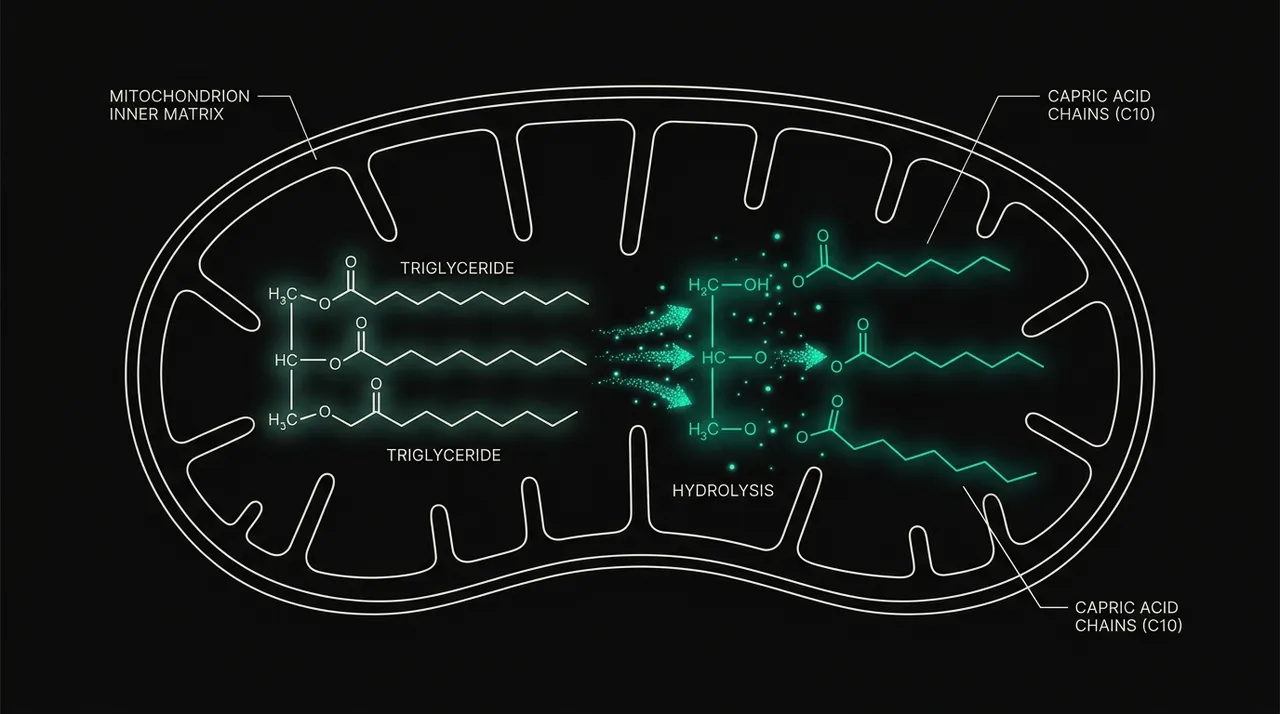
A popular belief in the nutrition space insists that tricaprin supplement products are a universal metabolic upgrade that effortlessly ramps up fat burning, optimizes cellular energy, and crushes muscle glycogen depletion during workouts. The reality from the trials is more interesting, and far more honest. Tricaprin, a specific medium-chain triglyceride (MCT) featuring three capric acid (C10) molecules, has indeed demonstrated strikingly specific capabilities in human research. However, these capabilities are entirely confined to a rare, genetically influenced lipid storage condition. The trials reviewed here do not show that healthy adults taking tricaprin experience outsized metabolic or performance gains. Let us look at the exact clinical data, the null exercise results, and why standard MCT oil often gets conflated with this highly targeted compound.
What the science actually says
The human research on tricaprin is highly specific, focusing almost entirely on a newly identified, rare, and noncommunicable heart condition known as triglyceride deposit cardiomyovasculopathy (TGCV). In this condition, defective intracellular lipolysis of long-chain triglycerides results in cellular steatosis and energy failure in cardiomyocytes [2].
The most rigorous piece of evidence is a Phase IIa investigator-initiated, multicenter, double-blind trial by Miyauchi et al. (2022). The researchers administered either 1.5 g/day of pure CNT-01 (tricaprin) or a placebo for 8 weeks to 17 patients with idiopathic TGCV. The primary outcome looked at the washout rate (WR) of iodine-123-β-methyl iodophenyl-pentadecanoic acid (123I-BMIPP), which directly reflects myocardial lipolysis [3]. The baseline-adjusted difference of delta BMIPP-WR between the two groups was statistically significant (p=0.035). The washout rates changed by 7.08±3.28% in the tricaprin group, compared to just -0.26±3.28% in the placebo group (95% confidence intervals, -0.01 to 14.18 and -7.36 to 6.84 respectively) [3].
However, we must flag this trial's limitations. First, the sample size was tiny (17 patients). Second, the statistical significance was only achieved after excluding one patient from the placebo group due to coronary bypass graft stenosis. Third, clinical parameters like 6-minute walk distance and TGCV severity score did not show significant changes [3]. The mechanism of action was proven, but functional outcome improvements were not.
A larger 2025 registry study by Hirano et al. tracked long-term survival and heart failure recovery in TGCV patients treated with supplemental tricaprin. The authors noted "remarkable long-term survival and durable recovery of HF in patients with TGCV" [2]. However, because this relied on registry studies rather than a tightly controlled, placebo-administered environment, we must hold the enthusiasm in check. It is a strong associative finding, but lacks the rigid controls of a blinded placebo trial.
The literature also starkly refutes general performance enhancement. A classic double-blind human trial by Horowitz et al. (2000) investigated pre-exercise MCT ingestion. The researchers found that consuming medium-chain triglycerides prior to exercise does not alter muscle glycogen use during the subsequent workout [5]. If you are seeking an ergogenic aid or a training advantage, this specific data point is a hard stop.
How tricaprin may influence cellular lipolysis
The clinical benefits observed in the TGCV population are strictly mechanistic. Triglyceride deposit cardiomyovasculopathy is caused by a genetic deficiency of adipose triglyceride lipase (ATGL), a rate-limiting enzyme in the intracellular hydrolysis of triglycerides [1]. When ATGL fails, long-chain triglycerides accumulate dangerously in the myocardium and coronary artery smooth muscle cells [1]. Tricaprin directly bypasses this defective long-chain lipid processing. As a class of medium-chain triglycerides, tricaprin has been shown to correct defective myocardial triglyceride lipolysis [2]. By serving as a rapidly hydrolyzable lipid substrate, it may support the clearing of cellular steatosis and restore localized energy availability in cells with impaired long-chain processing [4].
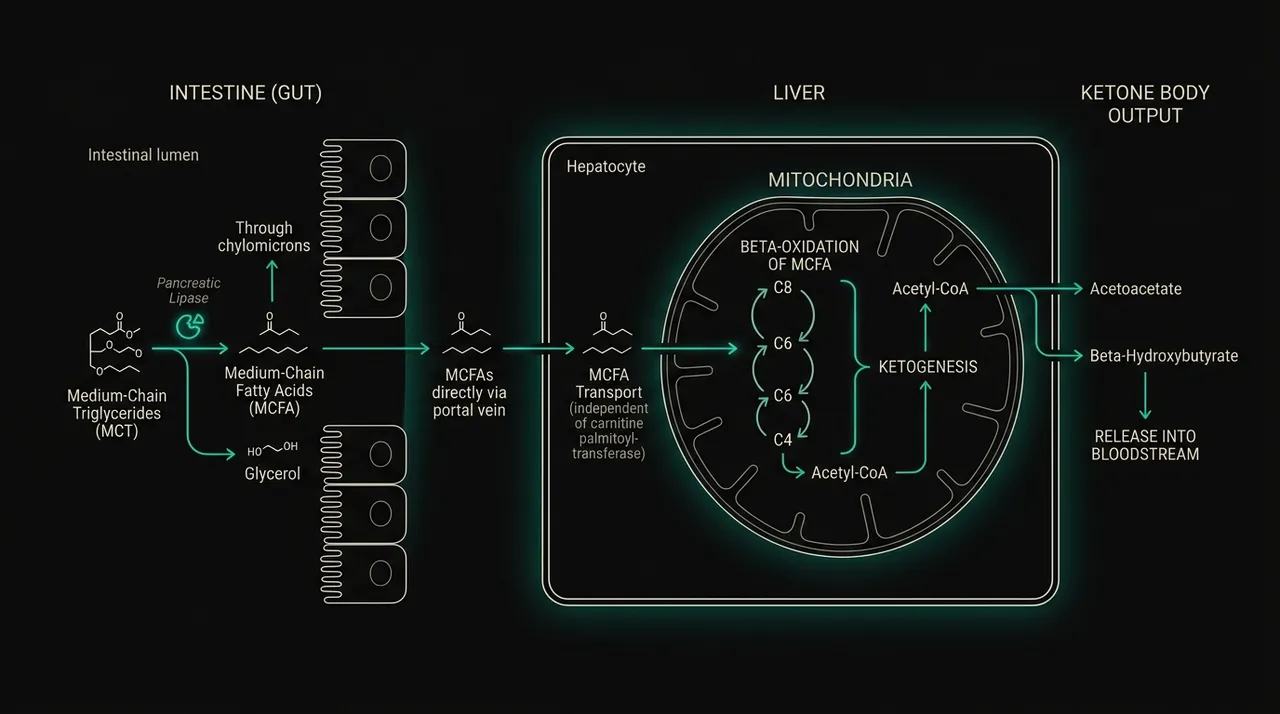
Tricaprin vs. MCT oil vs. Coconut oil
Understanding what you are buying requires strict label literacy. The market is flooded with generic MCT oils, but tricaprin is a distinct chemical entity.
| Source / Form | Primary Fatty Acid Chain | Evidence Profile |
|---|---|---|
| Tricaprin (CNT-01) | C10 (Capric Acid) | Tested in human RCTs for defective myocardial lipolysis [3]. |
| Standard MCT Oil | C8 (Caprylic) / C10 blend | Pre-exercise ingestion does not alter muscle glycogen use during exercise [5]. |
| Coconut Oil | C12 (Lauric Acid) + Long-chains | Unproven to facilitate targeted cellular lipolysis in clinical settings. |
When evaluating the best tricaprin supplements, consumers must distinguish between a true glycerol tricaprate formulation and generic C8-heavy MCT blends that merely contain trace amounts of C10.
Practical dosing
The clinical dosage used to achieve the specific lipid-clearing effects in human trials is exactly 1.5 g/day, administered orally for 8 weeks [3].
When evaluating products, elemental-versus-total label literacy is critical. Tricaprin is a whole compound (glycerol bound to three capric acid molecules). Some manufacturers list the total tricaprin weight prominently, but consumers must calculate the actual capric acid (C10) yield to compare it against clinical dosing.
Standard guidance for supplements is to evaluate medication spacing. The EverPrime app's interaction engine tracks 41 documented supplement-medication and supplement-supplement interactions. For lipid-based supplements, standard guidance is to space these away from oral antibiotics and other lipophilic medications that rely on similar absorption pathways; you can map your specific regimen using our interaction checker tool.
Individuals with kidney disease or severe metabolic dysfunction require explicit clinician guidance before introducing high-dose lipid supplements. Furthermore, standard guidance applies to missed benefits: if you are taking a supplement without a documented gap in cellular lipid processing, you are likely experiencing no biological benefit.
If you are exploring broader metabolic support, understanding how to evaluate supplements requires looking past marketing to look at how different mineral and lipid compounds interact.
What the evidence does NOT show
It does not show tricaprin treats, cures, or prevents heart disease, general heart failure, or coronary artery disease in healthy adults. The trials reviewed here examine a rare disease state, not general cardiovascular support.
- It does not show superior ergogenic effects: Pre-exercise medium-chain triglyceride ingestion does not alter muscle glycogen use during exercise [5].
- It does not show broad metabolic increases: The mechanism specifically corrects defective lipolysis in cells where long-chain processing is broken [1]. It is not a generic metabolic accelerant.
- It does not show broad applicability: The authors explicitly note that these findings are restricted to specific cellular steatosis and warrant further investigation into other ethnicities and broader populations [2].
The popular claim is that taking tricaprin supplements will universally enhance metabolic function. The reality is that without a diagnosed lipolysis deficiency, these specific effects do not apply.
Myth-check
The Myth: Taking tricaprin capsules provides a universal metabolic upgrade and training advantage for healthy adults.
The Reality: The hard clinical data shows tricaprin is highly specific to rare lipid deposition conditions [1], and pre-exercise MCT oil ingestion does not even alter muscle glycogen use during workouts [5].
FAQ
What are the best tricaprin supplements?
The clinical trials utilized pure CNT-01, which is a pharmaceutical-grade formulation of glycerol tricaprate. When looking for tricaprin capsules for sale, check the label to ensure it specifies pure C10 (capric acid) triglycerides rather than a generic C8/C10 MCT blend [3].
What foods contain tricaprin?
Tricaprin is a naturally occurring fat found in minuscule amounts in certain animal milks and fats. However, achieving the 1.5 g/day clinical dose used in the Phase II trial requires targeted supplementation rather than relying on normal dietary intake [3].
Is there another name for tricaprin?
Tricaprin is also known chemically as glycerol tricaprate or C10 triglyceride. In clinical literature, it is sometimes referred to by its drug development code, CNT-01 [3].
What are the side effects of tricaprin?
In the randomized controlled trial, researchers noted that clinical parameters did not show significant changes, but the specific side effect profile was not exhaustively detailed in the abstract. As a structured lipid, general gastrointestinal tolerance varies by individual [3].
Where can I buy tricaprin supplements?
Tricaprin supplements are increasingly available online, often marketed as higher-end C10 MCT oils. Consumers should look for third-party testing to verify the purity and exact C10 concentration of the product before buying.
Related reading
- Supplement Science Overview
- Beetroot Supplement Benefits
- Magnesium and Calcium Supplement
- Cardiovascular Health Hub
- Energy Metabolism Hub
Related reading
- Supplement Science hub
- Benfotiamine Supplement: The Trial Data
- Beetroot Supplements: Honest Trial Results
- Magnesium and Calcium Supplements: The Honest Trial Data
- Best Form of Magnesium Supplement
References
- Kobayashi K et al. (2020). The Diagnostic Criteria 2020 for Triglyceride Deposit Cardiomyovasculopathy. Annals of nuclear cardiology. https://pubmed.ncbi.nlm.nih.gov/37123492/ doi:10.17996/anc.20-00131
- Hirano KI et al. (2025). Long-term survival and durable recovery of heart failure in patients with triglyceride deposit cardiomyovasculopathy treated with tricaprin. Nature cardiovascular research. https://pubmed.ncbi.nlm.nih.gov/39948308/ doi:10.1038/s44161-025-00611-7
- Miyauchi H et al. (2022). (123)I-BMIPP Scintigraphy Shows That CNT-01 (Tricaprin) Improves Myocardial Lipolysis in Patients with Idiopathic Triglyceride Deposit Cardiomyovasculopathy: First Randomized Controlled, Exploratory Trial for TGCV. Annals of nuclear cardiology. https://pubmed.ncbi.nlm.nih.gov/36540180/ doi:10.17996/anc.22-00167
- Mori T et al. (2026). Triglyceride deposit cardiomyovasculopathy: A new class of cardiovascular disease. Journal of cardiology. https://pubmed.ncbi.nlm.nih.gov/41980667/ doi:10.1016/j.jjcc.2026.04.003
- Horowitz JF et al. (2000). Preexercise medium-chain triglyceride ingestion does not alter muscle glycogen use during exercise. Journal of applied physiology (Bethesda, Md. : 1985). https://pubmed.ncbi.nlm.nih.gov/10642384/ doi:10.1152/jappl.2000.88.1.219
These statements have not been evaluated by the Food and Drug Administration. This content is for educational purposes only and is not a substitute for professional medical advice. Always consult a qualified healthcare provider before starting any new supplement, especially if you have a medical condition or are taking medications.
Build your personalized stack and track your daily intake with the EverPrime app.
Evidence Brief
Get supplement timing and safety notes as they ship.
Monthly evidence briefs. No hype, no disease claims, no influencer supplement stacks.