DAO Supplements for Histamine: The Honest Trial Data
DAO supplements are heavily marketed for histamine intolerance. The trial data shows highly specific benefits with modest effect sizes, not a broad cure.
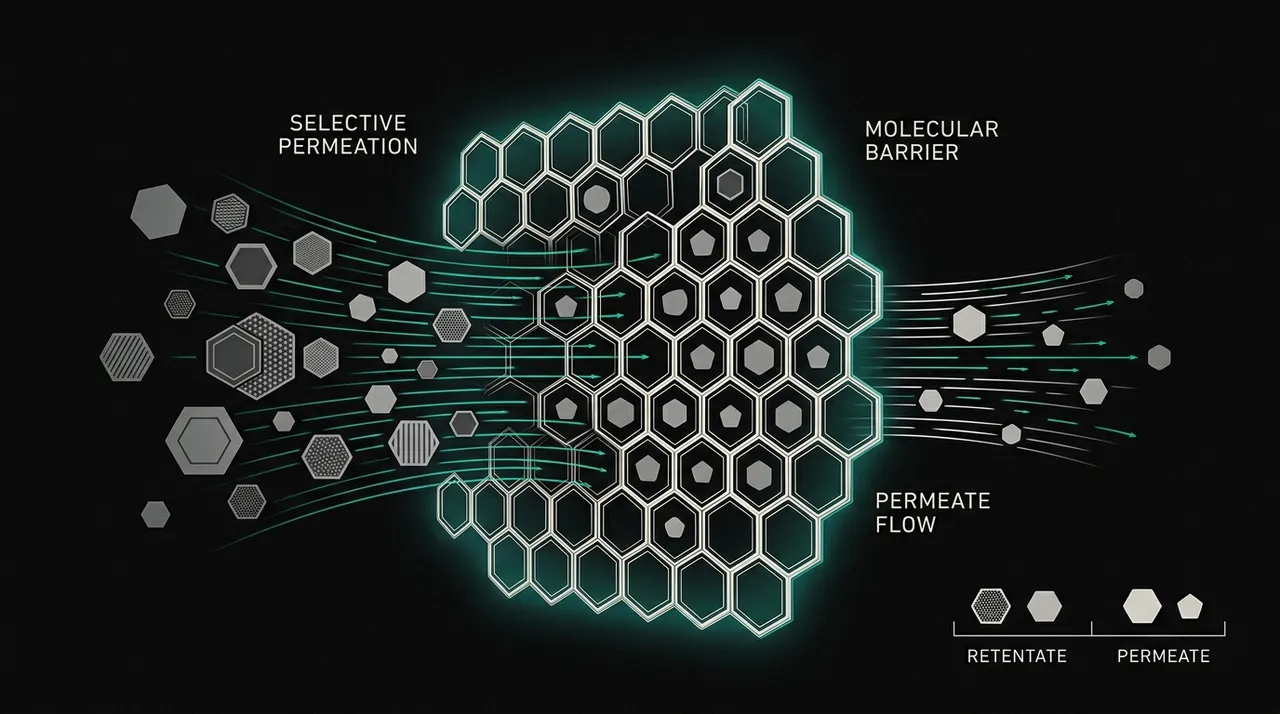
The popular belief is that a DAO supplement is a universal antidote for histamine intolerance, capable of erasing dietary mistakes and clearing symptoms across the board. The reality from the clinical trials is more interesting—and more honest. A diamine oxidase enzyme supplement does not erase histamine buildup or act as a cure-all. Instead, the human data shows a very narrow, population-specific benefit with remarkably modest effect sizes. For instance, in migraine patients with confirmed DAO deficiency, oral supplementation reduced the duration of a headache by roughly 1.4 hours compared to baseline, though a high placebo response meant this did not cleanly separate from the control group [3]. In dermatology, urticaria scores dropped by 3.8 points, but only in the specific subgroup of patients who started with low baseline serum DAO levels [2]. If you are exploring the broader landscape of digestive aids, our general supplements overview provides context on how different compounds are studied. For the DAO enzyme specifically, the data requires careful expectation management.
What the science actually says
The trials evaluating oral DAO supplementation are a mix of small, proof-of-concept randomized controlled trials (RCTs) and large, ongoing protocols that have not yet yielded results. Several of these studies exhibit structural limitations that temper their findings.
Yacoub et al. (2018) — Chronic Spontaneous Urticaria This was a double-blind, placebo-controlled, crossover investigation of 22 patients with chronic spontaneous urticaria (CSU) that was incompletely controlled by first-line antihistamine therapy. The intervention tested 30 days of oral DAO supplementation (1 capsule b.i.d., 15 minutes before a meal). Twenty patients completed the study.
- The Results: In the intent-to-treat population, the overall results were unimpressive. The authors reported that "supplemental therapy with DAO caused a 3.8 ± 1.2 point mean ± SEM Urticaria Activity Score (UAS-7) reduction in patients with low serum DAO levels at time 0 (p = 0.041 compared to placebo)." The degree of UAS-7 improvement was inversely correlated with the levels of basal DAO (p = 0.019). Patients receiving DAO were also able to slightly reduce their daily antihistamine dose (p = 0.049) [2].
- The Reality: A 3.8-point reduction on the UAS-7 is a modest, albeit statistically significant, shift. The trial does not provide evidence that DAO supplementation helps patients with normal or unidentified baseline DAO levels.
Izquierdo-Casas et al. (2019) — Episodic Migraine This randomized, double-blind trial evaluated 100 patients with confirmed episodic migraine (per International Headache Society criteria) and confirmed DAO deficiency (levels below 80 HDU/ml). Patients were randomized to receive either a DAO enzyme supplement or a placebo for one month [3].
- The Results: The study found high variability in the duration of migraine attacks across both groups. The DAO supplement group experienced a decrease in the duration of pain from a mean of 6.14 (±3.06) hours at baseline to 4.76 (±2.68) hours post-treatment (p = 0.0217).
- The Reality: While the DAO group saw a 1.4-hour reduction in pain duration from their own baseline, the placebo group also experienced a 0.9-hour reduction in pain duration. The authors explicitly noted that the reduction in the placebo group "could explain the lack of significant differences between both study groups" for the primary endpoint [3]. Additionally, the number of attacks and the scores of pain intensity showed a similar reduction in both the DAO and placebo groups. The DAO group did uniquely show a decrease in the percentage of patients taking triptans, but framing this as a resounding win for migraine prevention overstates the evidence.
Schnedl et al. (2019) — Histamine Intolerance Symptoms This open-label interventional pilot study enrolled 28 patients diagnosed with histamine intolerance. Participants took DAO capsules before meals for four weeks, followed by a four-week washout period without supplementation. Outcomes were measured via a 22-symptom questionnaire across gastrointestinal, cardiovascular, respiratory, and skin categories [7].
- The Results: All symptom categories improved significantly during the supplementation phase. Gastrointestinal symptoms improved most prominently (p < 0.0001), followed by cardiovascular (p < 0.0001), skin (p = 0.001), and respiratory symptoms (p = 0.0142). During the washout period, symptom scores reverted toward baseline.
- The Reality: The open-label design means both patient and researcher expectations could have influenced the observed improvements. There was no placebo control, no blinding, and no randomization. The magnitude of improvement is impossible to separate from placebo effects, regression to the mean, and the natural fluctuation of histamine intolerance symptoms. These data are hypothesis-generating, not proof-of-efficacy.
Duelo et al. (2024) — Study Protocol The literature also includes an ambitious prospective, unicentric, double-blind, randomized, and placebo-controlled trial protocol aiming to enroll 400 patients with histamine intolerance [1]. The trial is designed to evaluate the efficacy of a low-histamine diet and exogenous DAO enzyme supplementation (from porcine or plant sources) over a three-month period.
- The Reality: This is strictly a protocol [1]. As of the available data, there are no reported outcomes, effect sizes, or conclusions from this trial. It highlights that researchers recognize the limitations of prior small-cohort studies and are attempting to gather more robust data, but those results are currently unavailable.
How DAO supplements may influence histamine degradation
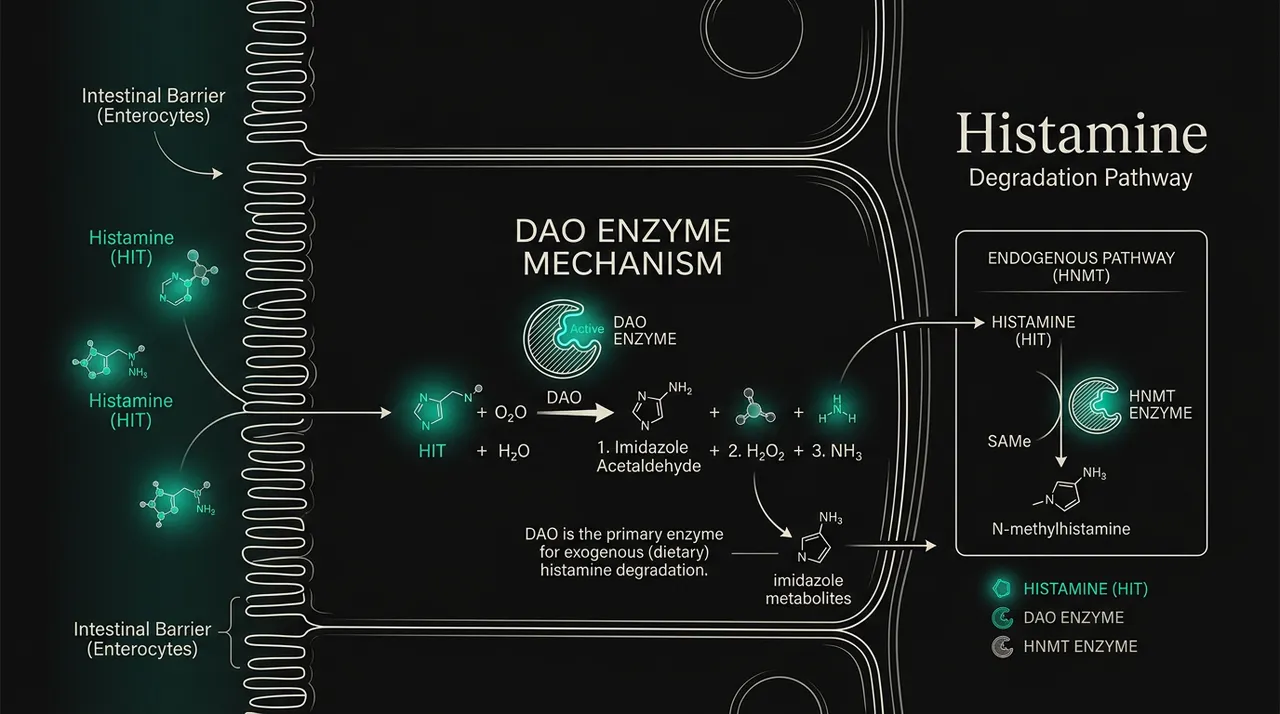
Diamine oxidase is an enzyme whose highest expression occurs in the gastrointestinal tract, where it metabolizes and inactivates histamine [2]. Histamine intolerance is assumed to be primarily caused by a deficiency of this enzyme at the intestinal level, which reduces histamine degradation in the gut and leads to its accumulation in plasma [1,4]. This systemic accumulation is associated with multiple clinical manifestations, such as urticaria, diarrhea, headache, dyspnea, or tachycardia [1,4,5].
Oral DAO supplementation provides exogenous enzymes intended to function in the gut lumen. Rather than entering systemic circulation to resolve circulating histamine, the introduced diamine oxidase is theorized to break down histamine derived directly from food intake before it can cross the intestinal barrier and trigger downstream symptoms [2,6]. Importantly, DAO addresses only histamine entering from the diet. Histamine produced internally by the body's own mast cells and basophils is primarily degraded by a different enzyme, histamine N-methyltransferase (HNMT), which operates inside cells [4,5]. A DAO supplement will not influence this endogenous pathway.
Comparison of studied interventions
Because the literature evaluates different applications and sources of diamine oxidase, comparing the study arms helps contextualize the evidence:
| Study / Arm | Sample Size | Intervention | Duration | Key Outcome |
|---|---|---|---|---|
| Yacoub et al. (2018) [2] | 22 (20 completed) | Oral DAO (1 cap b.i.d., 15 min before meals) | 30 days | 3.8 ± 1.2 point UAS-7 score reduction in low baseline DAO subgroup (p = 0.041). |
| Izquierdo-Casas et al. (2019) [3] | 100 | Oral DAO supplement | 30 days | Reduced migraine attack duration from baseline by 1.4 hours (p = 0.0217), but placebo also dropped 0.9 hours. |
| Schnedl et al. (2019) [7] | 28 | Oral DAO capsules before meals | 4 weeks | Symptom improvement across GI, cardiovascular, respiratory, and skin categories (open-label, no placebo control). |
| Duelo et al. (2024) [1] | Target: 400 | Low-histamine diet and/or DAO (porcine or plant) | 3 months | No results reported (Protocol only). |
Practical dosing
Dosing in the clinical literature is modest and based strictly on the timing of administration to intercept food intake. The most concrete human instruction was provided by Yacoub et al., utilizing a regimen of one capsule twice daily (b.i.d.), taken 15 minutes before a meal [2].
Label Literacy and Elemental Context When consumers evaluate DAO supplement options for histamine intolerance, standard label literacy shifts slightly compared to minerals. While you do not need to calculate elemental milligrams of a metal (like distinguishing elemental magnesium from bound magnesium glycinate), you do need to assess enzyme activity. DAO is typically measured in HDU (Histamine Degrading Units) rather than standard milligrams. A product may list a high milligram weight of a proprietary protein blend, but the relevant metric is the enzymatic activity, which should be transparently quantified on the label. Different products rely on plant or porcine protein bases, making unit comparison essential.
Duration Expectations and Tolerability In the trials reviewed, interventions lasted 30 days before clinical endpoints were measured [2,3]. They are not intended for random, sporadic dosing in the middle of a flare-up. Adverse effects were not registered in the one-month migraine trial [3]. Standard safety guidance suggests that individuals with known allergies to the source material (such as porcine proteins or specific legumes/plants used in vegetarian formulas) should avoid these products.
Subgroup Cautions If you are managing kidney disease, standard clinical guidance dictates consulting your physician before introducing novel protein-based enzyme supplements, as filtration dynamics can be altered. There are no specific interaction classes (like antibiotics or bisphosphonates) deeply documented for DAO in these trials, but if you are spacing out medications, our mineral and antibiotic timing tool or the broader interaction checker can help you map out your regimen. (For context on GI-related supplement spacing, our probiotic antibiotic context page provides related guidance).
What the evidence does NOT show
- It does not show DAO treats, cures, or prevents disease. These are structure/function findings regarding symptom severity, not medical treatments for chronic conditions.
- It does not show universal efficacy for anyone with histamine sensitivity. The popular generic claim that an enzyme supplement will resolve all histamine-driven complaints is unsupported. In the dermatology trial, the beneficial effect was strictly inversely correlated with basal DAO levels [2]. If you do not have low circulating DAO, the trial evidence suggests you will likely not experience a clinically meaningful drop in symptom scores.
- It does not show reliable relief for acute, post-hoc ingestion. The trial interventions were designed around consistent, multi-week supplementation [2,3], not as a rescue medication taken after symptoms have already initiated.
- It does not show superiority of porcine over plant sources. While ongoing protocols are evaluating both [1], no head-to-head data in the reviewed literature establishes one form as more effective than the other.
Myth-check
The Popular Claim: Taking a DAO supplement will eliminate food sensitivities, reverse histamine overload, and provide rapid relief from systemic symptoms like weight gain, migraines, and digestive distress within days.
The Reality: The evidence does not support framing DAO as a form-specific panacea. The clinical data shows that generic claims are largely overblown. In the migraine trial, both the supplement and placebo groups saw nearly identical reductions in the number of attacks and pain intensity [3]. The only differentiating factor was a fractional reduction in the duration of the attacks, which did not reach inter-group significance. The evidence indicates that if your baseline DAO is not deficient, supplementation is unlikely to do anything at all. Claims that DAO resolves complex multi-system issues lack the controlled, form-specific trial backing required to validate them.
FAQ
Does a DAO supplement cause weight gain?
No. The reviewed trials do not report weight gain or metabolic changes as an adverse effect of diamine oxidase supplementation. Changes in weight were not noted as a primary or secondary outcome in the histamine intolerance literature reviewed here [2,3].
What are the symptoms of low diamine oxidase?
Low DAO activity is associated with an accumulation of histamine, which may result in clinical manifestations like urticaria, diarrhea, headache, dyspnea, or tachycardia [1].
Who should not take a DAO supplement?
Anyone with a known allergy to porcine (pig) or specific plant protein sources should avoid corresponding DAO supplements, as immune reactions to foreign enzymes are a theoretical risk. Standard guidance is to consult a clinician if you are pregnant, lactating, or managing severe kidney disease before starting new supplementation.
What is the best DAO supplement for histamine intolerance?
The trials reviewed here do not provide head-to-head comparisons of commercial brands. The evidence suggests looking for a product that discloses its enzyme source (porcine or plant) and matches the doses used in clinical trials, rather than relying on generic marketing claims.
Related reading
- Supplement Science Topics
- Benfotiamine Supplement: The Trial Data
- Digestive Health Conditions
- Welcome to EverPrime Research
- Magnesium For Sleep: Does It Work?
- Best Form of Magnesium Supplement
- Magnesium Glycinate vs Citrate
References
- Duelo A, Sánchez-Pérez S, Ruiz-León AM, et al. (2024). Study Protocol for a Prospective, Unicentric, Double-Blind, Randomized, and Placebo-Controlled Trial on the Efficacy of a Low-Histamine Diet and DAO Enzyme Supplementation in Patients with Histamine Intolerance. Nutrients. https://pubmed.ncbi.nlm.nih.gov/39796463/ doi:10.3390/nu17010029
- Yacoub MR, Ramirez GA, Berti A, et al. (2018). Diamine Oxidase Supplementation in Chronic Spontaneous Urticaria: A Randomized, Double-Blind Placebo-Controlled Study. International archives of allergy and immunology. https://pubmed.ncbi.nlm.nih.gov/29698966/ doi:10.1159/000488142
- Izquierdo-Casas J, Comas-Basté O, Latorre-Moratalla ML, et al. (2019). Diamine oxidase (DAO) supplement reduces headache in episodic migraine patients with DAO deficiency: A randomized double-blind trial. Clinical nutrition (Edinburgh, Scotland). https://pubmed.ncbi.nlm.nih.gov/29475774/ doi:10.1016/j.clnu.2018.01.013
- Schnedl WJ, Enko D. (2021). Histamine Intolerance Originates in the Gut. Nutrients. https://pubmed.ncbi.nlm.nih.gov/33921522/ doi:10.3390/nu13041262
- Hrubisko M, Huertas D, Majtan J. (2021). Histamine Intolerance-The More We Know the Less We Know. A Review. Nutrients. https://pubmed.ncbi.nlm.nih.gov/34209583/ doi:10.3390/nu13072228
- Alemany-Fornés M, Reyes-Pavón D, Jiménez-Martínez E, et al. (2025). Diamine oxidase deficiency implications for health, current management, and future directions in the treatment of histamine intolerance: A review. International journal of biological macromolecules. https://pubmed.ncbi.nlm.nih.gov/40865824/ doi:10.1016/j.ijbiomac.2025.147130
- Schnedl WJ, Schenk M, Lackner S, Enko D, Mangge H, Forster F. (2019). Diamine oxidase supplementation improves symptoms in patients with histamine intolerance. Food Science and Biotechnology. https://pubmed.ncbi.nlm.nih.gov/31695709/ doi:10.1007/s10068-019-00627-3
These statements have not been evaluated by the Food and Drug Administration. This content is for educational purposes only and is not a substitute for professional medical advice. It is not intended to diagnose, treat, cure, or prevent any disease. Always consult a qualified healthcare provider before starting a new supplement, especially if you are pregnant, nursing, or managing a chronic medical condition.
Stop guessing about your supplement stack. Download EverPrime to track your intake, log symptom changes, and check formulations against medication interactions using our proprietary interaction engine. Get the app or try our free supplement label audit tool to verify what you are actually taking.
Evidence Brief
Get supplement timing and safety notes as they ship.
Monthly evidence briefs. No hype, no disease claims, no influencer supplement stacks.