Magnesium Glycinate vs Citrate: Which Fits Your Goal
Glycinate for calm, citrate for absorption and regularity? We compare the two most common magnesium forms using real bioavailability trials.

Ask the internet which magnesium to buy and you'll get two answers shouted at once: glycinate for sleep, citrate for regularity. Both camps are half right and half marketing. The evidence is narrower — and more interesting — than either side admits.
The two forms, briefly
Magnesium doesn't exist as a lone metal in a capsule; it's always bound to something. That partner molecule changes how the mineral behaves in your gut, which is the entire basis of the magnesium glycinate vs citrate debate.
- Magnesium glycinate (bisglycinate) pairs magnesium with the amino acid glycine. It's the form most often recommended for evening use and for people with sensitive stomachs.
- Magnesium citrate pairs magnesium with citric acid. It's an osmotic salt — it pulls water into the intestine — which is why it doubles as a gentle laxative.
Before you pick, it's worth checking whether you even need to supplement. Our guide to the signs of magnesium deficiency covers who's actually at risk.
What the absorption data actually says
Here's where the popular narrative gets complicated. Citrate has a strong bioavailability track record. In a Mg-saturated crossover design, single-dose citrate significantly raised 24-hour urinary magnesium excretion and lifted plasma magnesium at 4 and 8 hours, while magnesium oxide did neither [1]. A separate 60-day randomised, double-blind trial in 46 people concluded that "daily supplementation with Mg citrate shows superior bioavailability after 60 days of treatment when compared with other treatments studied" [3].
Glycinate's data is thinner and, frankly, less flattering on the absorption front. In a 40-person double-blind crossover study, plasma magnesium rose significantly after citrate and oxide — but no significant increase was observed after magnesium bisglycinate over the tested time-points [2]. That doesn't mean glycinate is useless; short plasma-window studies don't capture everything. But it does puncture the assumption that the "gentle" form is automatically the better-absorbed one.
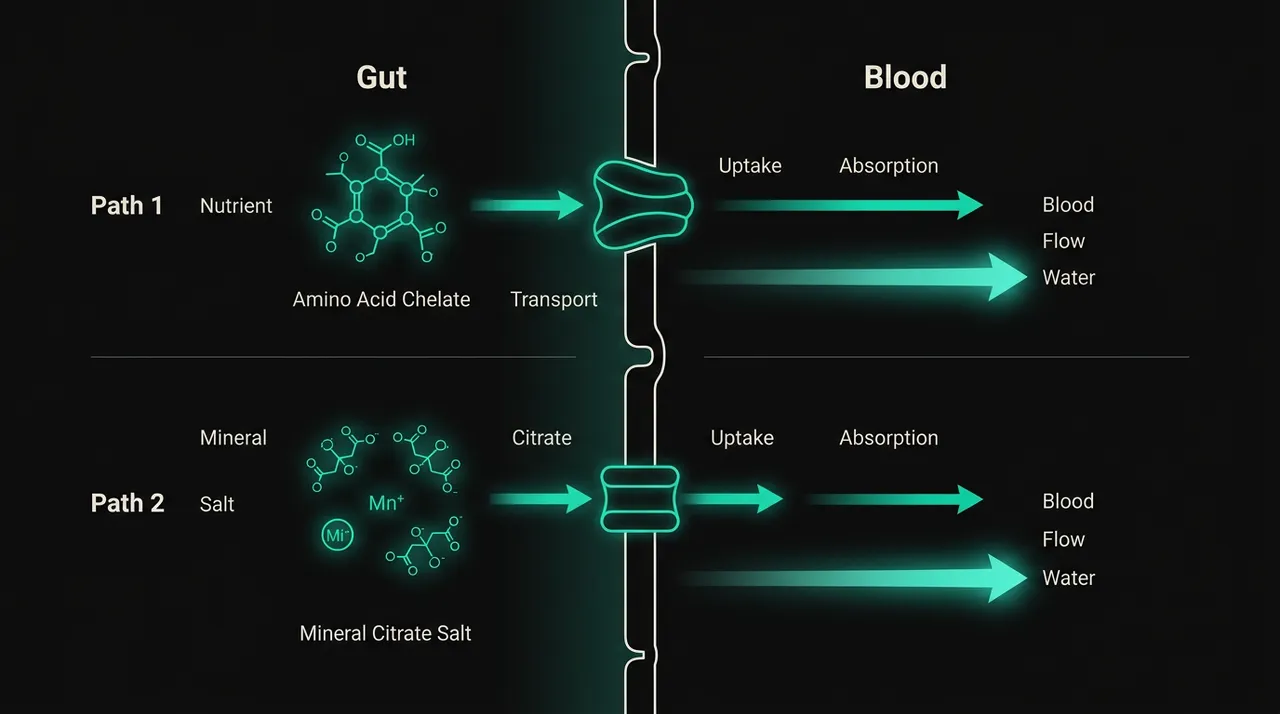
Side by side
| Feature | Magnesium glycinate | Magnesium citrate |
|---|---|---|
| Bound to | Glycine (amino acid) | Citric acid |
| Bioavailability evidence | No significant plasma rise in one crossover trial [2] | Superior vs oxide in multiple trials [1][3] |
| Gut effect | Gentle, low osmotic pull | Osmotic — can loosen stools [2] |
| Common use case | Evening / sensitive stomachs | Absorption + regularity |
| Laxative tendency | Low | Higher |
Practical dosing
Supplement trials here used 300–400 mg of elemental magnesium per day [1][3] — a reasonable ceiling for most adults from a supplement, on top of food. A few practical notes grounded in the evidence and common sense:
- If you want magnesium citrate for constipation or take it for absorption, expect a mild osmotic effect; start low and split doses if your gut is sensitive [2].
- If you're using magnesium glycinate for sleep or you find citrate loosens your stool too much, glycinate's tolerability is its main selling point — just don't assume it delivers more magnesium per milligram.
- Read labels for elemental magnesium, not total compound weight. The numbers above refer to elemental content.
For a broader ranking of forms including malate, taurate, and oxide, see our breakdown of the best form of magnesium supplement.
What the evidence does NOT show
This is the part the supplement aisle skips.
- No provided study shows either form treats, cures, or prevents insomnia, anxiety, cramps, or any medical condition. The trials measured absorption and side effects [1][2][3] — not clinical outcomes.
- No head-to-head trial here compares glycinate against citrate for sleep. The "glycinate = better sleep" claim rests on glycine's proposed calming role, not on direct comparative data in these sources.
- Glycinate's absorption edge is not established by this evidence; in fact the one crossover study found it did not significantly raise plasma magnesium [2].
Myth-check
Myth: "Glycinate is the most absorbable magnesium, period."
Reality: In the head-to-head crossover data provided, citrate significantly raised plasma magnesium and bisglycinate did not [2], and citrate repeatedly outperformed oxide [1][3]. Glycinate's real advantage is tolerability, not proven superior uptake. Choosing a form is about matching it to your goal and your gut — the same logic we apply when we ask whether ingredients like beta-alanine actually work rather than trusting the label hype. This is the whole point of reading supplement science before you buy.
FAQ
Is magnesium glycinate or citrate better for sleep?
Glycinate is the popular evening pick because it's gentle, but no trial in the provided evidence shows it beats citrate for sleep. The calming reputation is mechanistic and anecdotal, not clinically proven here.
Does magnesium citrate cause loose stools?
Citrate is osmotic and more likely to increase intestinal motility than gentler forms. A comparative trial noted "increased intestinal motility and sensations of gastric heaviness" with some magnesium sources [2] — a mild laxative effect that's a feature for some and a downside for others.
Which form is more absorbable?
Citrate beat magnesium oxide in multiple studies [1][3], and in one crossover trial citrate raised plasma magnesium while bisglycinate did not [2]. So "gentle" doesn't automatically mean "better absorbed."
What are the side effects of magnesium glycinate?
Glycinate is generally well tolerated with less GI disturbance than osmotic forms. High doses of any magnesium can loosen stools. None of the provided studies show it treats or prevents any condition.
Related reading
- Magnesium supplement overview
- Best form of magnesium supplement
- Magnesium L-Threonate Benefits: Honest Trial Results
- Magnesium and Calcium Supplements: The Honest Trial Data
- Signs of magnesium deficiency
- Supplement science topics
- Ashwagandha vs Magnesium for Stress: The Trial Data
References
- Werner T et al. (2019). Assessment of bioavailability of Mg from Mg citrate and Mg oxide by measuring urinary excretion in Mg-saturated subjects. Magnesium research. PubMed · doi:10.1684/mrh.2019.0457
- Pajuelo D et al. (2024). Comparative Clinical Study on Magnesium Absorption and Side Effects After Oral Intake of Microencapsulated Magnesium (MAGSHAPE(TM) Microcapsules) Versus Other Magnesium Sources. Nutrients. PubMed · doi:10.3390/nu16244367
- Walker AF et al. (2003). Mg citrate found more bioavailable than other Mg preparations in a randomised, double-blind study. Magnesium research. PubMed
These statements have not been evaluated by the FDA. This content is educational only and is not intended to diagnose, treat, cure, or prevent any disease, and is not a substitute for professional medical advice.
Evidence Brief
Get supplement timing and safety notes as they ship.
Monthly evidence briefs. No hype, no disease claims, no influencer supplement stacks.