Magnesium for Sleep: Does It Actually Work?
An evidence-based look at whether magnesium helps you sleep, which form and dose matter, and what the research does not prove.
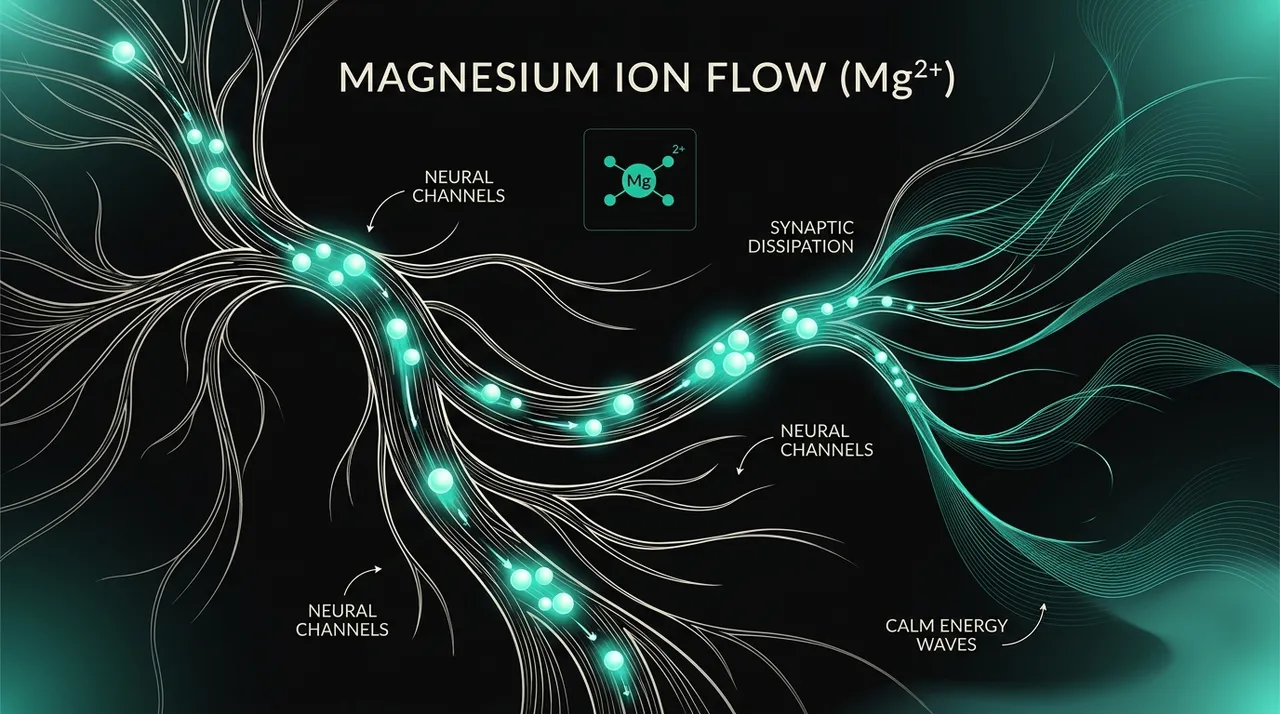
Magnesium is the internet's favorite sleep mineral, and the pitch is seductive: a cheap, natural mineral that calms your nervous system and knocks you out. The reality from the trials is more interesting—and more honest. Magnesium may help some people sleep a little better, but the effect is usually modest and depends heavily on who you are and which form you take.
What the science actually says
Let's start with the strongest recent data. A 2025 randomized, placebo-controlled trial of 155 adults with poor sleep found that magnesium bisglycinate at 250 mg elemental daily produced a significantly greater drop in Insomnia Severity Index scores than placebo over four weeks (-3.9 vs -2.3, p = 0.049) [2]. But the authors were refreshingly blunt about the size of that effect: "The effect size was small (Cohen's d = 0.2), indicating a modest benefit" [2].
A separate 2024 trial tested magnesium L-threonate (1 g/day for 21 days) using both questionnaires and an Oura ring. Here the picture looked better: the L-threonate group significantly improved deep sleep score, REM sleep score, and light sleep time versus placebo, plus daytime mood, energy, and alertness [1].
In people with diabetes and insomnia, magnesium (alone or with potassium) significantly reduced insomnia severity and shifted sleep hormones—raising serum melatonin and lowering cortisol (p = 0.001) [3]. And in older adults with primary insomnia, 500 mg magnesium daily for eight weeks improved insomnia measures compared with placebo [5]. The proposed reason: magnesium acts as an NMDA antagonist and GABA agonist, both relevant to sleep regulation [5].
But one trial deserves a caution flag. A USDA study of 100 adults over 51 found that PSQI sleep scores improved substantially (10.4 to 6.6, p < 0.0001)—regardless of whether people got magnesium or placebo [4]. In other words, a big chunk of the "magnesium helped me sleep" experience may be placebo plus regression to the mean.
How magnesium may influence sleep
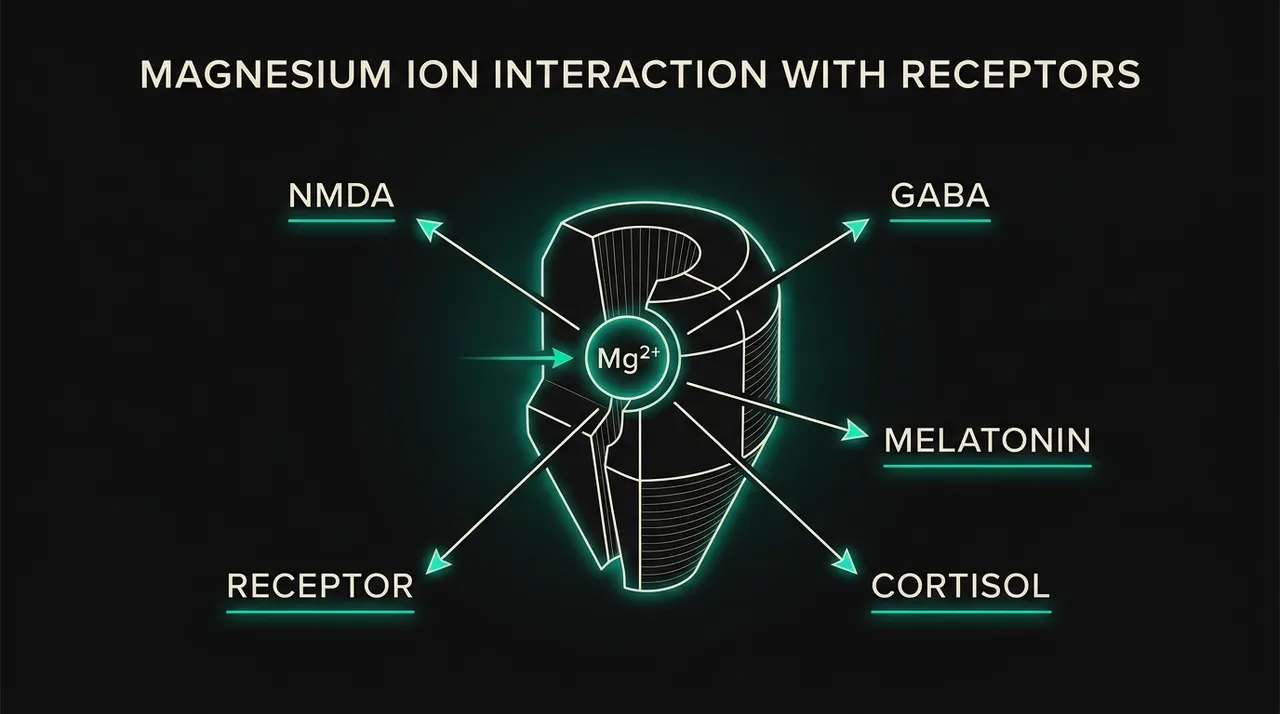
The mechanistic story runs through the brain's excitatory/inhibitory balance. Magnesium blocks NMDA receptors (calming excitatory signaling) and supports GABA activity (the brain's main "slow down" system) [5]. Downstream, supplementation has been associated with higher melatonin and lower cortisol—the hormones that tell your body it's night [3]. The threonate form is marketed for brain bioavailability, and the trial data on deep and REM sleep are at least consistent with a central-nervous-system effect [1].
Critically, several studies hint that magnesium status matters. In the bisglycinate trial, "exploratory analyses suggested notably greater improvements among participants reporting lower baseline dietary magnesium intake" [2]. The USDA data found 58% of participants were eating below the Estimated Average Requirement for magnesium [4]. If you're deficient, correcting that may help; if you're already replete, the upside shrinks. If you suspect you're running low, review the signs of magnesium deficiency.
Comparing the forms studied for sleep
| Form | Studied dose | What improved | Effect size / notes |
|---|---|---|---|
| Bisglycinate (glycinate) | 250 mg elemental [2] | Insomnia Severity Index [2] | Small (Cohen's d = 0.2); bigger in low-intake subgroup [2] |
| L-threonate | 1 g/day [1] | Deep + REM sleep scores, mood, energy [1] | Objective (Oura) + subjective gains [1] |
| Citrate | 320 mg/day [4] | Sleep scores improved—but so did placebo [4] | No clear magnesium-specific benefit [4] |
| Magnesium (+ potassium) | not specified [3] | Insomnia severity, melatonin, cortisol [3] | In diabetic population [3] |
If you're weighing options, our breakdowns on magnesium glycinate vs citrate and the best form of magnesium supplement go deeper on tolerability and absorption.
Practical dosing
- Glycinate: ~250 mg elemental magnesium in the evening is the studied dose [2]. Remember the label's total milligrams aren't the same as elemental content—check both.
- L-threonate: 1 g/day of the compound was used in the sleep trial [1]. This delivers less elemental magnesium than the number on the front suggests.
- Give it weeks, not nights. Benefits in these trials showed up over 3–8 weeks [1][2][5], not on day one.
- Tolerability: glycinate is generally gentle; forms like citrate can loosen stools. Both magnesium L-threonate and bisglycinate were reported as safe and well tolerated in their trials [1][2].
Curious about the broader mineral? Start with our magnesium overview and the wider supplement science hub.
What the evidence does NOT show
- It does not show magnesium treats, cures, or prevents insomnia or any sleep disorder. These are structure/function findings, not medical claims.
- It does not cleanly prove magnesium makes you fall asleep faster—the strongest trials measured insomnia severity and sleep-stage scores, not consistently a shorter time-to-sleep [1][2][3].
- The USDA trial couldn't separate a true magnesium effect from placebo, since sleep improved in both groups [4].
- No provided trial tested magnesium plus melatonin together, so any claim of a combined boost is unsupported here [3].
- Effect sizes were often small [2], and several studies used self-reported or short-term measures the authors themselves flagged as limitations [2].
Myth-check
Myth: "Magnesium is a natural sleeping pill." Reality: The best-controlled data show modest, subgroup-dependent benefits—one large trial saw identical improvement in the placebo arm [4]. It's a mineral you may be low in, not a sedative. Treat expectations accordingly.
FAQ
Does magnesium help you sleep faster?
The evidence is mixed. Some trials show modest reductions in insomnia severity and improved sleep hormones, but effect sizes tend to be small and no trial cleanly proves it speeds up how fast you fall asleep [2][3]. It may help most in people with low baseline magnesium intake.
What's the best magnesium for sleep?
There's no single winner. Magnesium bisglycinate is gentle on the gut and showed a modest ISI benefit at 250 mg elemental [2], while magnesium L-threonate improved deep and REM sleep scores at 1 g/day [1]. Choice depends on tolerance and goals.
How much magnesium glycinate should I take for sleep?
Studied doses cluster around 250 mg of elemental magnesium daily [2]. A supplement's total milligrams differ from its elemental content, so check the label. Take it in the evening and start low.
Can I take magnesium and melatonin together for sleep?
They act through different pathways—magnesium influences endogenous melatonin and cortisol [3], while melatonin is a direct hormone dose. No provided trial tested them combined, so we can't claim added benefit. Discuss combinations with a clinician.
Related reading
- Magnesium: full supplement overview
- Magnesium glycinate vs citrate
- Best form of magnesium supplement
- Signs of magnesium deficiency
- Supplement science hub
- Ashwagandha vs magnesium for stress: the trial data
References
- Hausenblas HA et al. (2024). Magnesium-L-threonate improves sleep quality and daytime functioning in adults with self-reported sleep problems: A randomized controlled trial. Sleep medicine: X. PubMed · doi:10.1016/j.sleepx.2024.100121
- Schuster J et al. (2025). Magnesium Bisglycinate Supplementation in Healthy Adults Reporting Poor Sleep: A Randomized, Placebo-Controlled Trial. Nature and science of sleep. PubMed · doi:10.2147/NSS.S524348
- Khalid S et al. (2024). Effects of magnesium and potassium supplementation on insomnia and sleep hormones in patients with diabetes mellitus. Frontiers in endocrinology. PubMed · doi:10.3389/fendo.2024.1370733
- Nielsen FH et al. (2010). Magnesium supplementation improves indicators of low magnesium status and inflammatory stress in adults older than 51 years with poor quality sleep. Magnesium research. PubMed · doi:10.1684/mrh.2010.0220
- Abbasi B et al. (2012). The effect of magnesium supplementation on primary insomnia in elderly: A double-blind placebo-controlled clinical trial. Journal of research in medical sciences : the official journal of Isfahan University of Medical Sciences. PubMed
These statements have not been evaluated by the FDA. This content is educational only and is not intended to diagnose, treat, cure, or prevent any disease, and is not a substitute for professional medical advice.
Evidence Brief
Get supplement timing and safety notes as they ship.
Monthly evidence briefs. No hype, no disease claims, no influencer supplement stacks.