Iron Pills for Anemia: The Honest Evidence on What Works
Oral iron increases hemoglobin, but many respond poorly. See the trial data on dosing, absorption windows, and how to read supplement labels correctly.
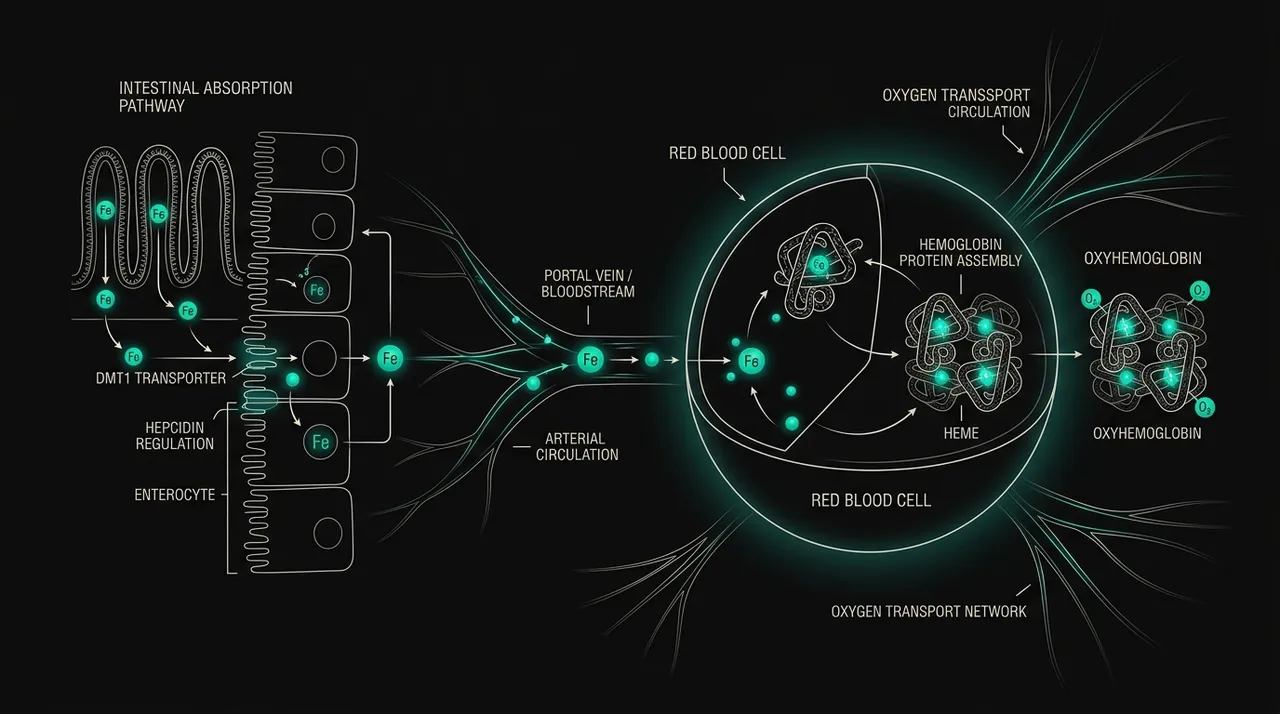
If you have been told that simply popping a high-dose iron pill will immediately fix low energy and rebuild your blood stores, the reality from the trials is more interesting and more honest. Oral iron supplementation does reliably increase hemoglobin in specific populations, but the magnitude of that effect is highly conditional. In a 12-week randomized trial of nonpregnant women, daily iron increased mean hemoglobin by 5.6 g/L, yet only 19% of those taking iron alone actually qualified as hemoglobin responders [4]. Tolerability is a massive hurdle. Form choice, gastrointestinal side effects, and precise medication spacing matter far more than finding the supplement with the biggest elemental number on the label. If you want to know how to take iron pills correctly, you have to look past the marketing and read the clinical outcomes.
What the science actually says
The trials reviewed here show a mixed but actionable picture. A 2017 double-blind, randomized controlled supplementation trial by Karakochuk et al. evaluated nonpregnant Cambodian women of reproductive age (aged 18 to 45 years) who had screening hemoglobin concentrations of 117 g/L or below. The study used a 2 x 2 factorial design, assigning 809 women (760 of whom completed the trial) to receive 12 weeks of 60 mg daily iron, multiple micronutrients (MMNs), iron plus MMNs, or placebo.
The iron-only results were statistically significant but modest in absolute clinical response. Mean hemoglobin concentrations at 12 weeks in the iron group were 121 g/L (95% CI: 120, 121) compared to 116 g/L (95% CI: 116, 117) in the placebo group. The mean increase in hemoglobin attributed to iron was 5.6 g/L (95% CI: 3.8, 7.4 g/L; P < 0.001). However, the predicted proportion of women who experienced a clinically defined hemoglobin response of 10 g/L or more at 12 weeks was just 19% in the iron-only group, 30% in the combination iron plus MMN group, and only 5% in the placebo group [4]. The data shows that while iron moves the average, individual response is highly variable.
Oral iron also faces scrutiny regarding dosing schedules and absorption versus intravenous alternatives. The 2022 DEODO study protocol by Kron et al. outlines an open-label, pilot, feasibility randomized controlled trial comparing 300 mg of oral ferrous sulfate (yielding exactly 60 mg of elemental iron) taken once daily versus every other day for 12 weeks. The study explicitly targets individuals with iron deficiency anemia (defined as hemoglobin < 12.0 g/dL in females and < 13.0 g/dL in males, and ferritin < 30 mcg/L). The authors note that while oral iron is the first line of treatment, massive gaps still exist in understanding the appropriate dosing regimen, specifically whether alternate-day dosing can mitigate the high rates of side effects that force patients to abandon therapy [2].
When oral iron fails, the clinical pathway often shifts to intravenous administration, as explored by Auerbach et al. (2019) in the FERWON-IDA trial. This prospective, multi-center, randomized comparison evaluated iron isomaltoside 1000 versus iron sucrose in patients with iron deficiency anemia. While our focus remains on oral strategies, the existence of large-scale IV iron trials underscores a vital reality: oral supplementation is frequently poorly tolerated, poorly absorbed, or ineffective for a substantial subset of patients [5]. This is further supported by Van Wyck (1989), who detailed the difficulties of managing iron deficiency in patients with dialysis-associated anemia during erythropoietin replacement therapy, noting that oral strategies often fall short in complex clinical profiles where absorption is heavily impaired [6].
Certain acute medical events also complicate iron utilization. Chang et al. (2023) investigated the effects of oral iron supplementation on anemia secondary to acute nonvariceal upper gastrointestinal bleeding (UGIB). In this randomized controlled trial, 151 patients with nonvariceal UGIB and anemia at discharge were assigned to either 6 weeks of 600 mg/d oral ferrous fumarate or a control group with no iron supplementation. The primary outcome was a composite hemoglobin response. The proportion of patients achieving this composite response was significantly greater in the treatment group than in the control group (72.7% vs 45.9%; adjusted risk ratio [RR], 2.980; P = 0.004). The percentage change in hemoglobin level at the end of treatment was also significantly higher (34.2 ± 24.8% vs 19.4 ± 19.9%; adjusted coefficient, 11.543; P < 0.001) [1].
However, the overarching consensus from pooled analyses provides a sobering anchor on oral iron expectations. Okam et al. (2017) analyzed pooled data from five randomized trials to evaluate hemoglobin response rates to oral iron-replacement therapy. They found that most subjects (72.8%) were classified as responders, defined as achieving a 1.0 g/dL or greater increase in hemoglobin at day 14. The proportion of subjects with hemoglobin increases was greatest among those with postpartum anemia, intermediate among those with heavy uterine bleeding or gastrointestinal-related causes, and lowest among those with other causes. Crucially, a hemoglobin increase of less than 1.0 g/dL at day 14 most accurately predicted a lack of overall satisfactory response by day 42 or 56 (sensitivity 90.1%; specificity 79.3%; positive and negative predictive values of 92.9% and 72.7%, respectively) [3].
How oral iron may influence hemoglobin
The clinical outcomes observed in these trials rely on specific biological pathways. When you consume oral iron, it must navigate the gastrointestinal tract, where it is reduced to its ferrous state and absorbed through transporters on the intestinal lining. This absorption process is highly regulated and easily disrupted by competing nutrients and medications.
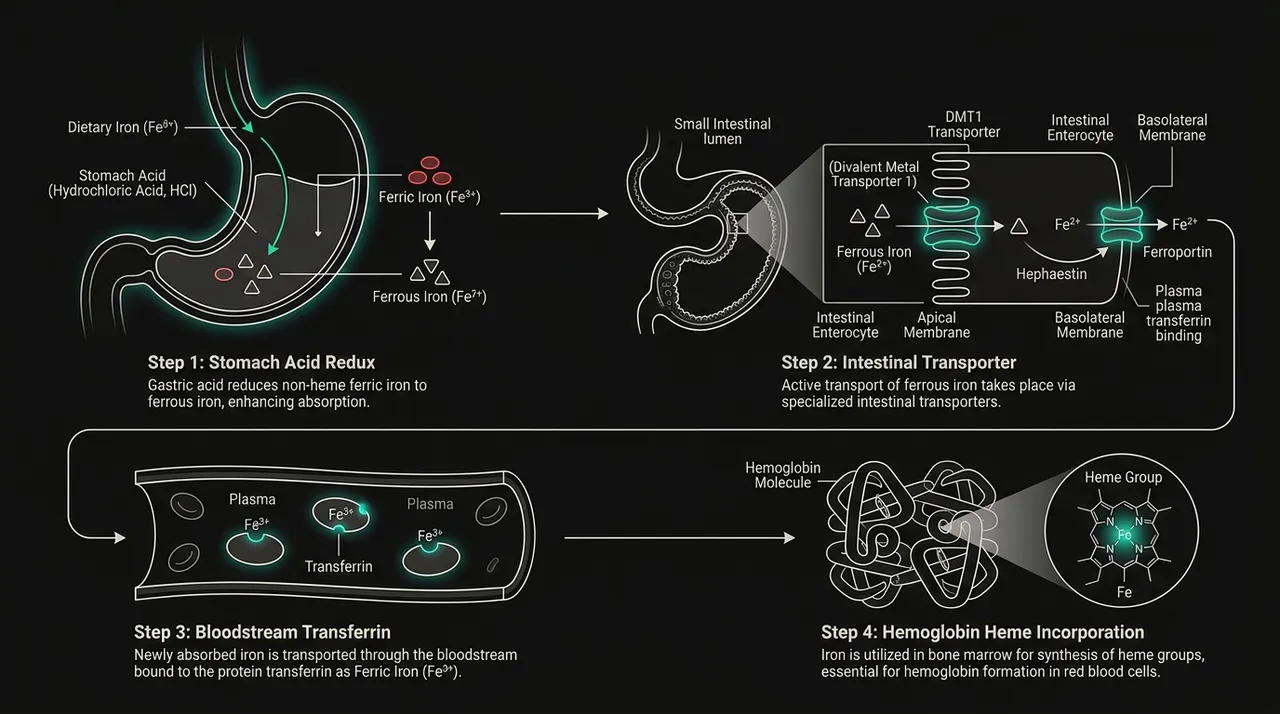
The core mechanism begins in the duodenum. Dietary ferric iron (Fe3+) is first reduced to ferrous iron (Fe2+) by duodenal cytochrome b (Dcytb) and gastric acid. Ferrous iron then enters enterocytes through the divalent metal transporter 1 (DMT1) on the apical membrane. Once inside the enterocyte, iron has two fates: it can be stored as ferritin or exported across the basolateral membrane via ferroportin, the only known cellular iron exporter. From there, iron binds to transferrin in the bloodstream and travels to the bone marrow, where it serves as the central structural component for hemoglobin synthesis [3].
This pathway is gated by hepcidin, a liver-derived peptide hormone and the master regulator of systemic iron balance. When hepcidin levels rise, which happens after iron ingestion, during inflammation, or in iron overload, it binds to ferroportin and triggers its internalization and degradation. The result: iron remains trapped inside enterocytes and is lost when those cells slough off, while macrophages also retain recycled iron. This is why taking large daily doses of iron can be counterproductive: a 60mg or greater dose stimulates an acute hepcidin spike that persists for roughly 24 hours, suppressing absorption of the next dose [7]. This hepcidin-mediated feedback loop is the mechanistic rationale behind alternate-day dosing protocols [2].
Once iron reaches the bone marrow via transferrin, it is incorporated into protoporphyrin IX to form heme, the oxygen-binding core of hemoglobin. Supplemental iron provides the necessary raw material to support erythropoiesis, the production of red blood cells. When the body detects adequate iron availability, it can synthesize hemoglobin efficiently, which in turn may support improved oxygen delivery and reduced feelings of physical fatigue [3].
Comparison of studied approaches
The differences between these clinical approaches highlight why context matters more than the raw dosage.
| Trial / Study | Population | Intervention | Duration | Key Hemoglobin Outcome |
|---|---|---|---|---|
| Karakochuk et al. (2017) [4] | Nonpregnant women | 60 mg iron, 60 mg iron + MMN, or placebo | 12 weeks | Mean increase of 5.6 g/L (P < 0.001); only 19-30% were responders |
| Okam et al. (2017) [3] | Pooled analysis of 5 trials | Oral iron-replacement therapy | Variable (response checked at day 14) | 72.8% were responders (achieved ≥1.0 g/dL increase) |
| Chang et al. (2023) [1] | UGIB patients | 600 mg/d oral ferrous fumarate vs control | 6 weeks | Composite response: 72.7% vs 45.9% (RR 2.980; P = 0.004) |
| Kron et al. (2022) [2] | Pilot feasibility protocol | 300 mg ferrous sulfate (60 mg elemental) daily vs alternate days | 12 weeks | Trial designed to measure effectiveness and side-effect profile |
Practical dosing
Understanding how to dose iron requires translating clinical trial protocols into practical, label-literate habits.
Iron form comparison Not all iron salts deliver the same amount of elemental iron or produce the same side-effect profile. If you are reading supplement labels, here is what the chemistry means in practice:
| Form | Typical tablet | Elemental iron % | Practical note |
|---|---|---|---|
| Ferrous sulfate | 325 mg | ~20% (65 mg) | Most studied; cheapest; higher GI side-effect rate |
| Ferrous fumarate | 324 mg | ~33% (106 mg) | Higher elemental yield per tablet; used in post-UGIB trials [1] |
| Ferrous gluconate | 325 mg | ~12% (39 mg) | Lower elemental iron; sometimes better tolerated |
The DEODO trial protocol specifies 300 mg of oral ferrous sulfate, which yields exactly 60 mg of elemental iron [2]. The Karakochuk trial used 60 mg of iron directly [4]. You must look at the supplement facts panel for the elemental milligrams, as 300 mg of ferrous sulfate provides only 60 mg of actual absorbable iron. The rest is salt weight. Standard guidance from the NIH Office of Dietary Supplements indicates that the Recommended Dietary Allowance (RDA) for most non-pregnant adults is 8 to 18 mg of elemental iron per day, though therapeutic doses used in trials to correct deficiency often range from 30 to 60 mg or higher.
Duration expectations Early signs of response tend to appear by day 14, or not at all. If hemoglobin has not risen by at least 1.0 g/dL by day 14, the evidence suggests you are unlikely to achieve a satisfactory overall response by day 42 or 56 [3].
Tolerability and spacing Gastrointestinal distress is the primary reason people abandon iron. The most commonly reported side effects are constipation, nausea, abdominal cramping, and dark or black stools, the last of which is harmless but alarming if unexpected. Some people experience diarrhea or a metallic taste. These effects are dose-dependent and often worse with higher elemental iron loads.
This is where timing, spacing, and form choice become critical. You must be acutely aware of your calcium and iron competition, as calcium can significantly inhibit iron uptake. Similarly, standard guidance is to observe an iron coffee and tea window, as polyphenols in these beverages bind to iron and limit its absorption. Taking iron with vitamin C may support uptake, but avoiding inhibitors is equally important.
If you are taking antibiotics, particularly tetracyclines or fluoroquinolones, or bisphosphonates, you must space your iron dose at least two hours apart to prevent chelation, where the minerals and medications bind together, neutralizing both. You can map these interactions easily using our mineral antibiotic timing tool.
Caution for specific populations General dosing guidance does not apply uniformly to everyone. Individuals with kidney disease, particularly those managing dialysis-associated anemia, require strict clinician guidance before adjusting iron intake, as their iron metabolism and erythropoietin responses are fundamentally altered [6]. If you have a history of gastrointestinal bleeding, your iron status must be evaluated carefully by a medical professional before initiating high-dose supplementation [1].
For a comprehensive breakdown of how this mineral functions in the body and to verify your specific product's formulation, review our complete iron supplement overview or read more about general iron status conditions.
What the evidence does NOT show
It does not show that taking the highest possible dose of iron pills cures, treats, prevents, or reverses all forms of anemia. Anemia is a symptom, not a single disease. The studies reviewed here are structure-function findings demonstrating that supplemental iron may support hemoglobin production, but they do not prove that swallowing massive doses of iron overcomes underlying absorption failures.
- It does not show that one-size-fits-all daily dosing is universally superior. The scientific community is actively investigating whether alternate-day dosing provides better tolerability and equivalent absorption compared to daily regimens [2]. Blindly taking high doses daily without assessing your own gastrointestinal response is not evidence-based.
- It does not show that "more is better" for cognitive or physical fatigue in the absence of deficiency. While iron replacement therapy improved quality of life and reduced fatigue in subjects diagnosed with iron-deficiency anemia [3], supplementing iron when your status is already normal does not confer a generalized energy benefit.
- It does not show that micronutrients solve poor iron response. Adding multiple micronutrients to an iron regimen did not confer additional significant benefit to hemoglobin response in a robust factorial trial [4]. If your iron response is poor, simply throwing a broader multivitamin at the problem is not supported by the data.
Myth-check
Myth: The best iron supplement for anemia without constipation is simply a lower-dose pill, and you just have to push through severe gastrointestinal side effects to rebuild your blood. Reality: Side-effect profiles are highly dose and schedule dependent. The clinical research community has recognized that standard daily dosing causes high rates of intolerance, prompting phase 3 trials specifically designed to test alternate-day dosing protocols. The biological basis is hepcidin: a large morning iron dose raises hepcidin for roughly 24 hours, which traps iron inside intestinal cells and suppresses absorption of the next dose. Alternate-day dosing sidesteps this feedback loop, potentially improving both tolerability and total iron absorbed [2].
Myth: More elemental iron always equals faster recovery. Reality: A 19% response rate in nonpregnant women taking 60 mg of elemental iron daily proves that pushing higher elemental numbers does not guarantee linear absorption [4]. In fact, flooding the gut with unabsorbed iron often triggers the exact side effects that cause people to abandon therapy entirely. Form choice, spacing, and biological readiness dictate absorption, not just the raw milligram count.
FAQ
How quickly do iron pills work for anemia?
Hemoglobin responses <1.0 g/dL at day 14 of oral iron identify subjects who should be transitioned to IV iron. If you do not respond early, later response is unlikely [3].
What is the best iron dosage per day?
Trials typically use 60 mg of elemental iron daily, though alternate-day dosing is increasingly studied to reduce gastrointestinal side effects [2]. Dosing depends on individual iron status [4].
Does iron cause constipation?
Oral iron supplementation is associated with gastrointestinal side effects. Alternate-day dosing protocols are explicitly designed to test whether spacing out doses improves tolerability [2].
How can I avoid interactions when taking iron?
Calcium and coffee or tea can compete with iron absorption. Standard guidance is to space iron away from these compounds, and to audit your supplement label for elemental dosing [4].
Related reading
- Explore our complete guide on oral iron supplements
- Understand the nuances of diagnosing and evaluating iron status
- Read our analysis of the calcium and iron absorption window
- Learn why the iron, coffee, and tea interaction window matters
- EverPrime getting started guide
- Check out more deep dives in our Supplement Science hub
References
- Chang A, Rugivarodom M, Pungpipattrakul N, et al. (2023). Role of oral iron supplementation for anemia secondary to acute nonvariceal upper gastrointestinal bleeding: a randomized controlled trial. Journal of Gastroenterology and Hepatology. https://pubmed.ncbi.nlm.nih.gov/36999193/ doi:10.1111/jgh.16185
- Kron A, Del Giudice ME, Sholzberg M, et al. (2022). Daily versus every other day oral iron supplementation in patients with iron deficiency anemia (DEODO): study protocol for a phase 3 multicentered, pragmatic, open-label, pilot randomized controlled trial. Pilot and Feasibility Studies. https://pubmed.ncbi.nlm.nih.gov/35509085/ doi:10.1186/s40814-022-01042-y
- Okam MM, Koch TA, Tran MH. (2017). Iron Supplementation, Response in Iron-Deficiency Anemia: Analysis of Five Trials. The American Journal of Medicine. https://pubmed.ncbi.nlm.nih.gov/28454902/ doi:10.1016/j.amjmed.2017.03.045
- Karakochuk CD, Barker MK, Whitfield KC, et al. (2017). The effect of oral iron with or without multiple micronutrients on hemoglobin concentration and hemoglobin response among nonpregnant Cambodian women of reproductive age: a 2 x 2 factorial, double-blind, randomized controlled supplementation trial. The American Journal of Clinical Nutrition. https://pubmed.ncbi.nlm.nih.gov/28490515/ doi:10.3945/ajcn.116.140996
- Auerbach M, et al. (2019). A prospective, multi-center, randomized comparison of iron isomaltoside 1000 versus iron sucrose in patients with iron deficiency anemia; the FERWON-IDA trial. American Journal of Hematology. https://pubmed.ncbi.nlm.nih.gov/31243803/ doi:10.1002/ajh.25564
- Van Wyck DB. (1989). Iron deficiency in patients with dialysis-associated anemia during erythropoietin replacement therapy: strategies for assessment and management. Seminars in Nephrology. https://pubmed.ncbi.nlm.nih.gov/2669082/
- Stoffel NU, et al. (2020). Oral iron supplementation in iron-deficient women: How much and how often? Molecular Aspects of Medicine. https://pubmed.ncbi.nlm.nih.gov/32650997/ doi:10.1016/j.mam.2020.100865
These statements have not been evaluated by the Food and Drug Administration. This content is for educational purposes only and is not a substitute for professional medical advice, diagnosis, or treatment. Always consult a qualified healthcare provider before beginning, altering, or stopping any supplement or medication regimen, especially if you have underlying health conditions.
Track your supplement timing and check interactions with the EverPrime interaction checker: 41 documented interactions.
Evidence Brief
Get supplement timing and safety notes as they ship.
Monthly evidence briefs. No hype, no disease claims, no influencer supplement stacks.